
Last updated November 2, 2026
 Wrought iron
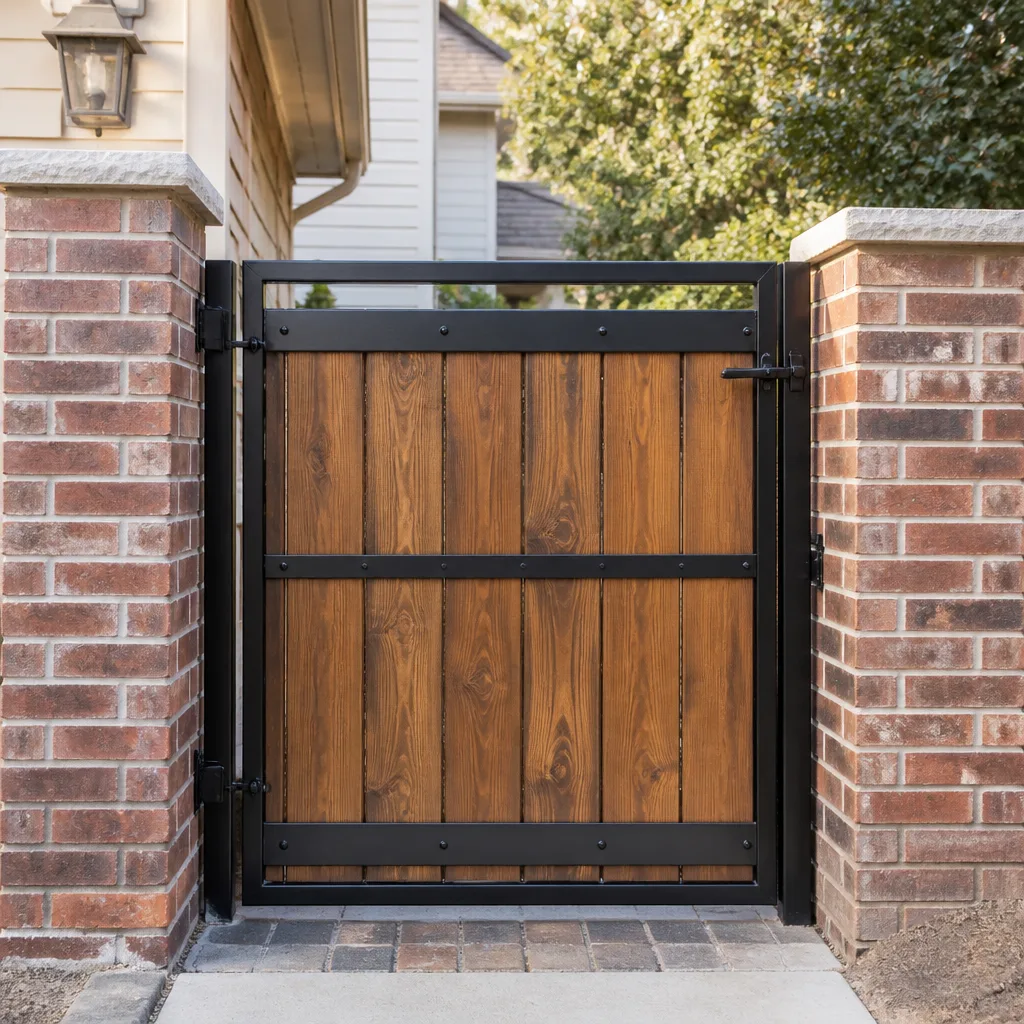 Wood & steel frame
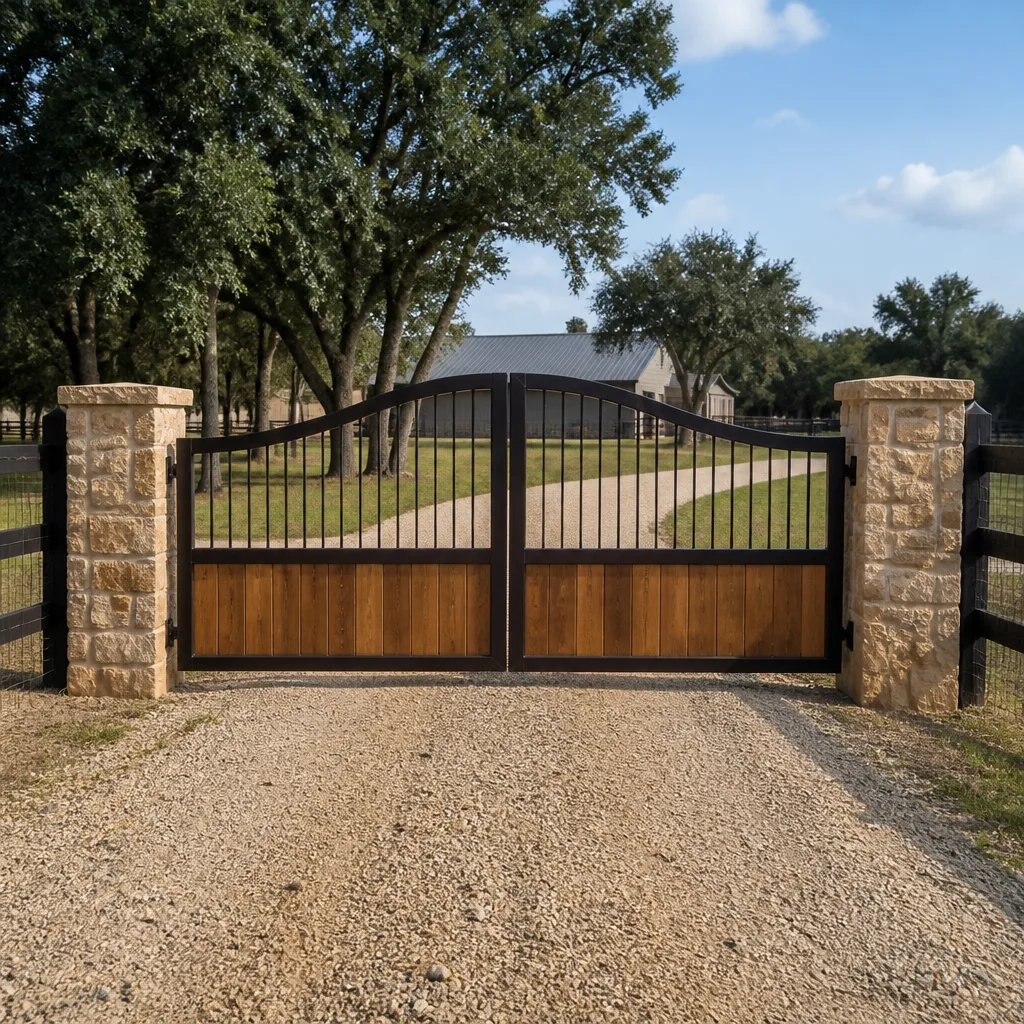 Farm & ranch
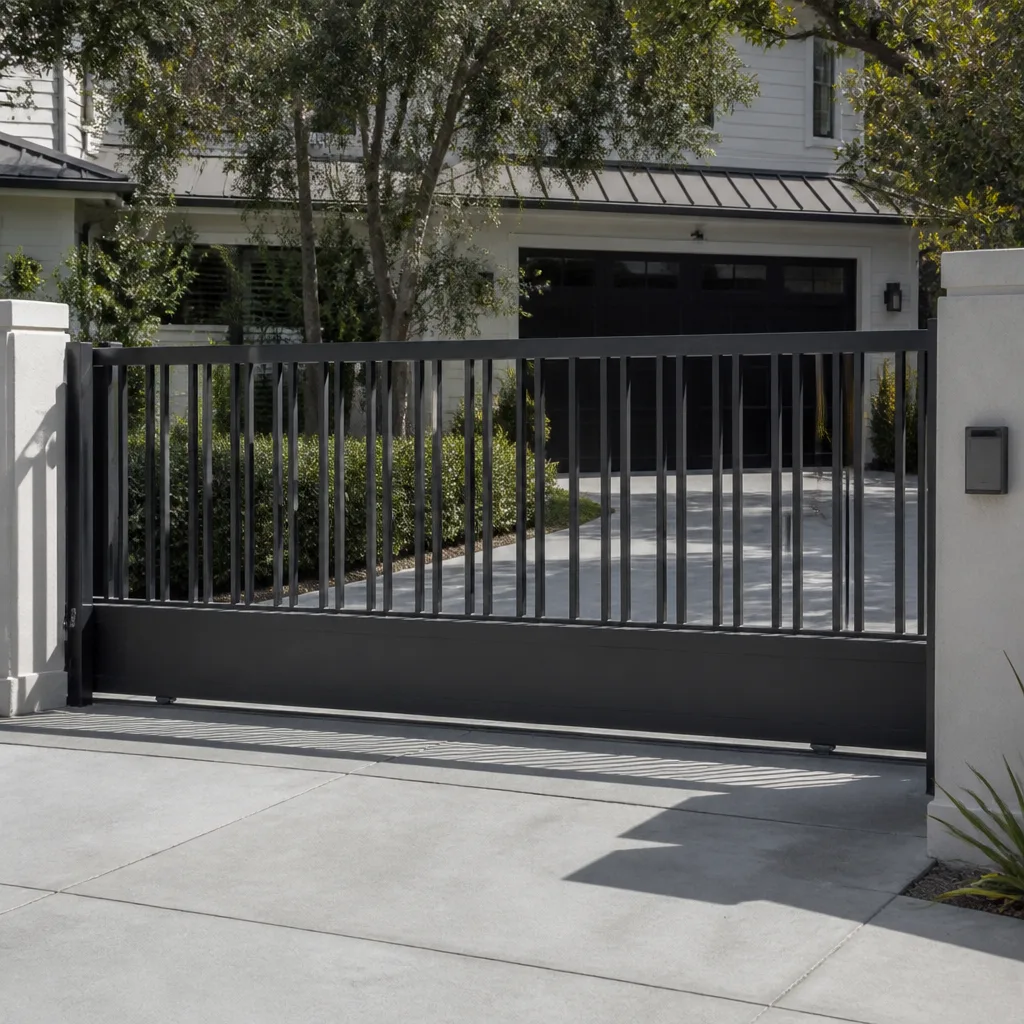 Sliding driveway gates
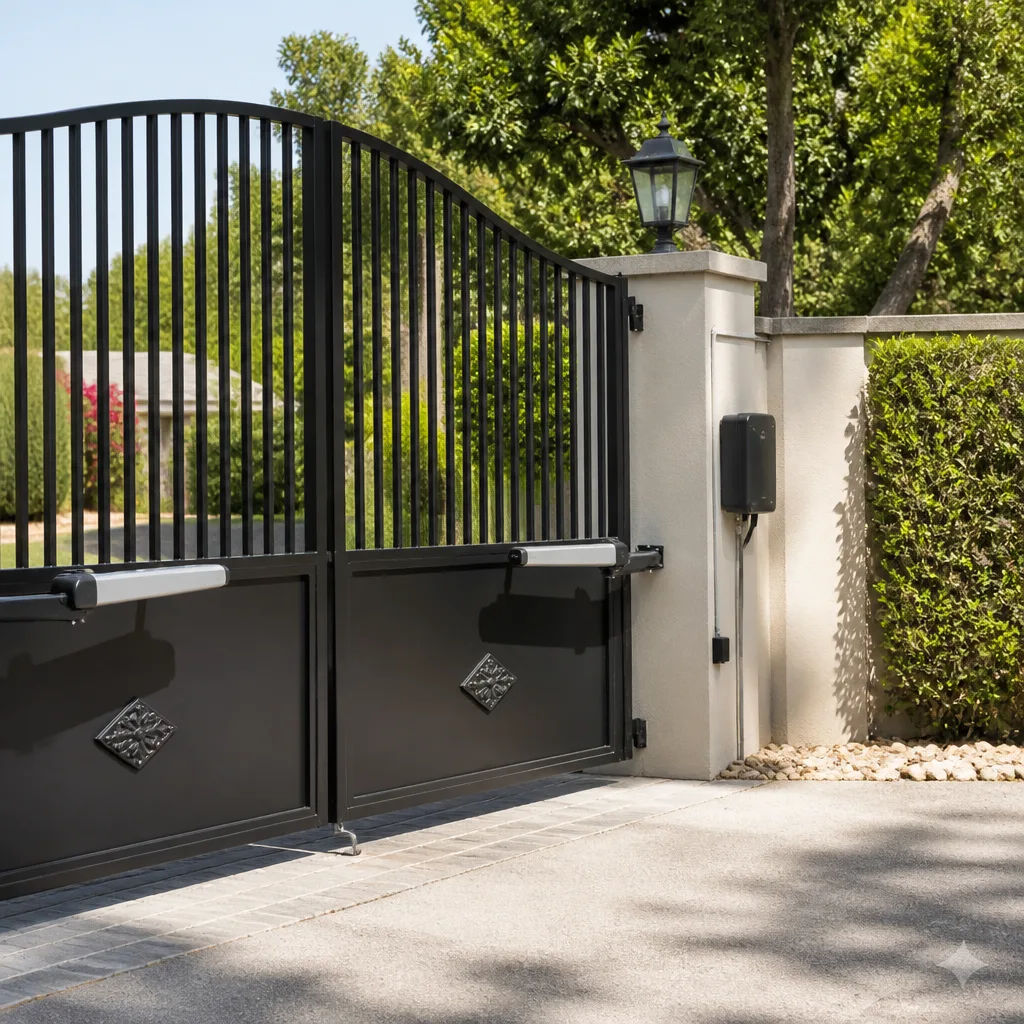 LiftMaster operators
Free on-site gate assessment - hinges, posts, and your LiftMaster or Nice gate operator checked before anything is quoted
The assessment is free and the quote is the invoice.
Get your free estimateGate Repair Warning Signs: A Crocker-Amazon Homeowner’s Reference Guide
A gate that hesitates for two seconds before moving isn’t “getting old.” It’s a gate whose motor is pulling 20 to 30 percent more amperage than spec to overcome a mechanical drag that will seize the operator within 60 to 90 days if left unaddressed. We see this pattern constantly across Crocker-Amazon driveways and commercial entries, and the frustrating part is how preventable most failures are. This guide – along with our Seasonal Gate Repair Care for Crocker-Amazon: Year-Round Homeowner’s Guide – walks you through the specific warning signs your gate is giving off, what each one actually indicates underneath the surface, and which ones need immediate attention versus which can wait for a scheduled visit.
Quick Answer
The most common gate repair warning signs in Crocker-Amazon are hesitation or stuttering during operation, grinding or clicking sounds from the operator, sagging or leaning gate posts, visible rust at weld points, and “ghost activation” where the gate opens or closes without input. Any of these signals, left unchecked for 60 to 90 days, typically progresses from a minor adjustment to a full repair or replacement. A grinding sound needs attention within the week; a gate that reverses direction on its own needs a same-day call.
Styles & brands we work with
- Wrought iron
- Wood & steel frame
- Farm & ranch
- Sliding driveway gates
- LiftMaster operators
Table of Contents
- Auditory Warning Signs: Grinding vs. Clicking vs. Humming
- Movement and Timing Warning Signs: Hesitation, Stutter, and Slowness
- Visual Warning Signs on Posts, Hinges, and Weld Points
- Ghost Activation: When Your Gate Moves Without Input
- Using Cycle Count and Runtime as Early Warning Metrics
- The Triage Framework: Scheduled Visit vs. Same-Day Service
- Brand-Specific Warning Signs: FAAC, Linear, Viking, and BFT
- Common Mistakes to Avoid
- When to Call a Professional
- Frequently Asked Questions
Auditory Warning Signs: Grinding vs. Clicking vs. Humming
Sound is the most reliable early indicator of gate distress, and each type of sound points to a different failure category. Learning to distinguish them saves you from ordering the wrong part or ignoring a problem that’s about to get expensive.
Grinding is almost always mechanical drag: the gate’s weight is being fought by the motor rather than assisted by properly aligned hardware. In Crocker-Amazon, where coastal fog and damp winter air accelerate metal-on-metal wear, we see this most often on steel gates whose hinge bearings have worn down to bare metal. A grinding sound means the motor is working against friction it wasn’t designed to overcome. That excess load shortens operator life dramatically. If a FAAC swing gate starts grinding, it’s usually the hinge carrier plates, not the hydraulic pump itself. If a Linear slide gate grinds, the problem is almost always the drive chain or the roller trucks at the base.
Clicking typically indicates an electrical or control board fault. A rapid click-click-click when you press the remote usually means the motor capacitor has failed or the control board is sending voltage but the motor can’t start. A single click followed by nothing means the board is tripping a safety circuit, often a photo eye or loop detector fault. Clicking rarely resolves on its own and tends to worsen, because the underlying condition, whether it’s a failing capacitor or a corroded connection on the board, keeps degrading.
Humming with no movement is the most serious auditory warning. This is the motor receiving power but being unable to turn the mechanism. On a Viking swing gate, a hum with no movement often means the gearbox has seized. On a BFT slide gate, it usually means the motor is running but the chain has jumped the sprocket or the gate has come off its track. A humming motor is an urgent condition: the motor is pulling maximum current while producing zero movement, which can burn out windings in under a minute if left powered.
If you’re hearing any of these sounds from a gate at your Crocker-Amazon property, our Gate Repair in Crocker-Amazon service covers the full diagnosis path, from the first sound to the final adjustment.
Movement and Timing Warning Signs: Hesitation, Stutter, and Slowness
A gate that hesitates before moving, stutters mid-travel, or opens noticeably slower than it used to is sending you a direct signal that something in the chain of command, from remote to receiver to board to motor to mechanical assembly, is degrading. The distinction between these three movement patterns matters because each points to a different layer of the system.
Hesitation before movement begins usually points to a control board issue or a failing start capacitor. The board is receiving the signal but delaying the motor start, either because it’s reprocessing a safety input or because the capacitor needs a moment to build charge. On many residential operators, this is an early sign that the board’s relay contacts are pitting, and the hesitation window will widen over the next few weeks.
Stuttering mid-travel, where the gate moves in jerky increments, is almost always mechanical drag combined with a motor that’s trying to compensate. The drag might come from a bent wheel, a dragging chain, or a hinge that’s binding. The motor surges as it overcomes each point of resistance. Stuttering is a clear signal to stop using the gate for daily cycles until diagnosed, because every stutter cycle is adding strain to the operator’s gearbox and the control board’s current handling components.
General slowness across the entire travel cycle can indicate low hydraulic fluid on a FAAC operator, a dying battery on a solar-assisted Mighty Mule setup, or a gate that has shifted out of alignment and is now dragging on its track or pivot. On gate systems in the Crocker-Amazon hills, where driveways often have an incline, a slow gate is frequently a gate fighting gravity after its support wheels have worn down.
The timing pattern to watch is simple: if the gate used to take four seconds to open and now takes seven, that’s not normal aging. That’s measurable degradation, and it won’t correct itself.
Visual Warning Signs on Posts, Hinges, and Weld Points
Your gate’s structure talks to you in visual language, and most homeowners notice the signs but don’t read them correctly. A gate that sits slightly crooked, a post with a hairline crack, a hinge that’s pulling away from the post, these are all structural warnings that precede a gate dropping, jamming, or failing catastrophically.
Sagging gates are the most common visual warning in Crocker-Amazon. A gate that used to clear the driveway by four inches and now scrapes or drags has a failing hinge assembly or a post that’s tilting. The weight of the gate leaf, especially on a heavy steel gate, works as a lever against the hinges 24 hours a day. When the top hinge starts to pull loose, the gap at the top corner tells you exactly which hinge is failing. A gate that sags at the latch side typically has a failing top hinge. A gate that drags at the bottom edge usually has a bottom hinge that’s worn or a post that’s leaning inward.
Rust at weld points is another silent indicator. Powder-coated gates hide rust until it breaks through the surface, but the weld seams are always the first place to show oxidation. Check the joints where the horizontal rails meet the vertical pickets, and the gussets at the corners. Rust in these locations means water has penetrated the finish, and the structural integrity of the weld is now compromised. In Crocker-Amazon’s fog-prone microclimates, especially in the lower elevations near McLaren Park, this process happens faster than in drier inland areas.
Post lean is the most serious visual sign. A gate post that’s leaning more than a few degrees out of plumb is bearing load it wasn’t designed to carry. On slide gates, look at the vertical alignment of the posts relative to the fence line. On swing gates, check if the gap between the two gate leaves is even from top to bottom. An uneven gap means one or both gate leaves have shifted, which leads directly to motor strain and eventual operator failure or complete gate collapse.
If you’re seeing any of these structural indicators on an electric gate, our Electric Gate Repair in Crocker-Amazon page covers how we diagnose structural issues alongside the electronic work, because the two are inseparable on most failing systems.
Ghost Activation: When Your Gate Moves Without Input
Ghost activation, where your gate opens or closes without anyone pressing a remote, keypad, or button, is one of the most misunderstood and underreported problems we see. Homeowners often assume it’s a remote signal from a neighbor or a programming quirk. It’s usually neither.
In the majority of cases we diagnose in Crocker-Amazon, ghost activation is caused by one of three conditions: a failing control board that’s spontaneously sending run commands, a short in the wiring that intermittently completes the activation circuit, or a loop detector that’s responding to a metallic object that isn’t there, often a buried pipe, rebar, or even a passing delivery truck’s undercarriage on a shared driveway approach. None of these are programming issues. All of them are safety issues.
A gate that activates without input can strike a car, a pet, or a person. It can also close on a vehicle that’s halfway through the opening, because the safety loops aren’t being read correctly. This is not a “wait and see” condition. If your gate moves without a clear command, disable the operator using the manual release and call for diagnosis the same day. The risk of entrapment, particularly with a heavier commercial-grade gate, is the reason this specific warning sign sits in the urgent category in our triage framework.
We’ve also seen cases in Crocker-Amazon where ghost activation was caused by water intrusion into the control box after a heavy rain event. The board sits in a housing that’s supposed to be weatherproof, but a failed gasket or a cracked housing lets moisture bridge contacts on the board’s low-voltage side, and the board interprets the resulting signal as a command. That’s why, after any significant storm, we recommend homeowners pay attention to any unusual gate behavior.
Using Cycle Count and Runtime as Early Warning Metrics
If your gate operator is a commercial-grade unit from FAAC, BFT, Linear, or Viking, it very likely has a cycle counter or runtime log stored in its control board. This data is one of the most underused diagnostic tools available to homeowners and property managers, and it can tell you a failure is coming before any audible or visual symptom appears.
Here’s how to use it:
- Find your operator’s rated cycle duty. Most residential operators are rated for a limited number of cycles per day and a limited total cycle life. A typical residential swing arm operator might be rated for 1,500 to 2,000 total cycles before major service, while a commercial hydraulic operator from FAAC can run tens of thousands. The spec sheet for your specific model lists this number.
- Check the cycle count. On Linear and Viking control boards, the cycle count is often displayed on the LCD screen or accessible through the diagnostic menu. On BFT units, the count is typically available through the programming interface. Write down the number.
- Compare actual to rated. If your operator is within 80 percent of its rated service life and you’re hearing any of the sounds described earlier, the sound and the count together mean the mechanical components are due for replacement before the operator fails outright.
- Track runtime, not just cycles. A gate that’s taking longer to complete a full travel cycle is doing more work per cycle. If your control board reports runtime per cycle, compare today’s number to what it was a month ago. An increase of 15 percent or more indicates added mechanical resistance.
- Reset the service timer after maintenance. After a tune-up, ask your technician to reset the service interval so the next warning lands at the right time.
Most Crocker-Amazon homeowners don’t realize their gate has been keeping a maintenance log. It has. Reading it is free and takes one minute, and it gives you a hard number instead of a vague feeling that “the gate seems slower lately.” For a full walkthrough of your specific operator’s diagnostics, our main Gate Repair Crocker-Amazon home page describes how our brand-specific technicians approach each system.
The Triage Framework: Scheduled Visit vs. Same-Day Service
Not every warning sign deserves the same response. Here’s the framework we use when a Crocker-Amazon homeowner calls us with a symptom. It divides into two categories: conditions that can wait a few days for a scheduled appointment, and conditions that need same-day attention.
Can wait for a scheduled appointment (within 3 to 5 days):
- A gate that opens slightly slower than before but completes its travel smoothly
- Light surface rust on non-structural areas
- A remote that works intermittently at distance but fine up close (this is a signal or battery issue, not a catastrophic failure)
- A hinge that’s visibly worn but the gate still sits level
- A keypad that’s finicky in cold weather
Needs same-day service:
- Grinding noise that’s present during every cycle (mechanical drag is actively damaging the motor)
- Ghost activation or any unexpected gate movement (entrapment risk)
- A gate that opens but won’t close, or closes but won’t open (the safety system has likely tripped, and your property is unsecured or inaccessible)
- A humming motor with no movement (burnout is imminent)
- A post that’s visibly leaning or a gate that’s dropped enough to scrape the ground (structural failure could drop the gate leaf)
The reason this distinction matters is cost. A gate that clicks but still moves can wait three days and the repair price won’t change materially. A gate that grinds for two more weeks will wear a $400 operator into a $1,800 replacement. Your warning signs are time-stamped, and the clock moves fast once you’re in the urgent category.
Brand-Specific Warning Signs: FAAC, Linear, Viking, and BFT
Each gate brand fails in characteristic ways. Knowing your brand’s weak points means you’ll recognize a warning sign earlier than a generic troubleshooting guide would tell you to look.
FAAC hydraulic operators are workhorses, but their hydraulic systems demand specific attention. The first sign of trouble on a FAAC swing gate is usually a gate that slows down noticeably in one direction or a pump that runs longer than it should. Low hydraulic fluid produces a whining sound from the pump, not a grinding one. That whine is your cue to call before the pump cavitates and destroys its internal seals. FAAC operators also signal trouble through their LED diagnostic codes, with a flashing pattern that maps to a specific fault. If you see a new flashing pattern on your FAAC control board, take a photo of it before calling.
Linear operators are common on residential slide gates throughout Crocker-Amazon, both on single-family driveways and small multi-unit lots. The most frequent early warning sign we see on Linear units is a control board that resets itself. If your gate occasionally stops mid-travel and then restarts, or if your remotes occasionally lose their programming, the board is likely developing a power supply fault. Linear boards are also sensitive to voltage spikes from the grid, and Crocker-Amazon’s older electrical infrastructure in some blocks can cause enough fluctuation to stress the board’s capacitors over time.
Viking swing gate operators are built for heavy commercial gates, and when they fail, they rarely fail quietly. The classic early warning sign on a Viking is a change in the sound of the gearbox: from a smooth whir to a rhythmic knock or clunk. That knock is a gear tooth that’s chipped or a bearing race that’s wearing unevenly. Viking operators also have a manual release mechanism that, if the cable is fraying or the lever is stiff, is telling you the release assembly needs attention. The Viking’s secondary warning sign is excess heat from the motor housing after normal use; a warm motor is fine, a hot motor is not.
BFT slide gate operators are common on apartment and condominium entries in the Crocker-Amazon area. The most frequent issue we diagnose on BFT units is the limit switch or encoder drifting out of calibration. The warning sign is a gate that no longer stops exactly where it should, either under-traveling and leaving a two-inch gap, or over-traveling and banging against the end stop. This drift is gradual, often over months, and it’s both a mechanical problem and a safety problem, because the gate’s closing force calculations depend on accurate limit positions.
If your gate matches any of these brand-specific patterns, a full Gate Installation in Crocker-Amazon estimate covers what a replacement would cost if the repair doesn’t pencil out, because sometimes the honest answer is that a 15-year-old operator with multiple failing subsystems is better replaced than patched.
Common Mistakes to Avoid
- Lubricating without diagnosing. Spraying WD-40 on a grinding hinge masks the sound for a few days and gives you false confidence. The underlying wear hasn’t changed, and the operator keeps working against the same friction. By the time the sound returns, you’ve added weeks of unnecessary motor wear.
- Adjusting the safety sensor to “fix” false reversals. A gate that reverses mid-close is often reading a safety obstruction signal. Tweaking the sensor’s alignment or sensitivity to override that signal doesn’t fix the fault, it disables a safety feature, and it leaves you with a gate that no longer stops for real obstructions.
- Ignoring a louder-than-normal hum. A gate motor that hums louder during operation is drawing more amperage. Every cycle at elevated amperage shortens the motor’s life. That’s not a quirk, it’s a countdown.
- Replacing the remote before checking the board. When a gate stops responding to a remote, the remote is often not the problem. A failing receiver board on the operator mimics remote failure perfectly. We’ve seen Crocker-Amazon homeowners buy two or three new remotes before discovering the board was the issue all along.
- Power-cycling the operator repeatedly. If your gate needs a power cycle to work after it locks up, you’re resetting the symptom, not the cause. Each lockup event is the board telling you something is overloading. Repeated resets are how a $200 board repair becomes a $1,000 board replacement.
- Waiting until the gate stops moving entirely. The most expensive gate repairs we perform are on gates that were showing clear warning signs for months. A gate that fails completely usually takes the motor, the board, and often the gearbox with it, turning a tune-up into a full rebuild.
When to Call a Professional
Call a professional when the warning sign involves anything you can’t see with the gate fully stationary, which is most of them. A gate operator contains high-tension springs, heavy moving components, and live electrical connections. DIY diagnosis on an electric gate is genuinely dangerous, particularly on slide gates where the drive chain can catch a finger or a sleeve, and on swing gates where the gate leaf’s full weight is suspended on hinge points that can fail suddenly. If your gate is grinding, ghosting, humming without movement, or showing visible post lean, that’s the moment to stop using the gate and call. For how to hire a gate repair contractor in Crocker-Amazon: a step-by-step guide, see our blog, or call Gate Repair Crocker-Amazon at (833) 842-7897 for a free estimate. We’ll tell you over the phone whether the symptom you’re hearing is a same-day situation or something that can wait for a scheduled appointment.
Frequently Asked Questions
Ghost activation, where the gate moves without any input from a remote, keypad, or button, is the most serious warning sign because it represents an entrapment risk, and it always indicates a control board, wiring, or loop detector fault. A gate that moves on its own can strike a car, a pet, or a person, and should be disabled at the manual release and diagnosed the same day.
A grinding gate typically fails completely within 60 to 90 days if the underlying mechanical drag isn’t corrected, because the motor is working against increasing resistance with every cycle. The timeline shortens significantly if the gate is cycled frequently, as it is on a daily-use driveway in Crocker-Amazon.
A gate that opens but won’t close is almost always a safety circuit fault: the photo eye is blocked or misaligned, the loop detector is reading a phantom obstruction, or the closing force setting has tripped. This is a diagnosed condition, not a quirk, and it leaves your property unsecured until corrected.
Tightening hinges on a sagging gate occasionally works as a temporary measure, but the sag usually returns because the hinge bearings are worn or the post itself has shifted. The fix is typically hinge replacement or post reinforcement, not a wrench adjustment, and if the gate is motorized, the sag is also damaging the operator.
A gate in Crocker-Amazon should be serviced at least once a year, and twice a year if it’s a high-cycle commercial entry or a gate in the fog-exposed lower elevations where moisture accelerates hinge and weld corrosion. For more guides & resources, visit our blog. Annual service typically catches the warning signs described in this guide before they escalate into failures.
Yes. Our technicians are trained on nine gate brands including FAAC, Linear, Viking, and BFT, covering both residential and commercial operators, and we diagnose the full system, not just the mechanical side. If your gate is one of these brands and it’s showing any of the warning signs above, call (833) 842-7897 for a free estimate.
The Bottom Line
Your gate has been warning you. The hesitation, the grind, the click, the sag, the ghost movement, these are all specific signals from specific failing components, and each one has a predictable trajectory. A gate that grinds is burning its motor. A gate that stutters is fighting mechanical drag. A gate that moves on its own is a safety hazard. Crocker-Amazon’s climate, with its fog, damp winters, and older electrical infrastructure in some blocks, accelerates several of these failure modes, which makes regular attention more valuable here than in drier, newer-built areas. Read the signals early, and a gate repair stays a repair. Ignore them, and it becomes a replacement. If any of the symptoms in this guide describe your gate, call (833) 842-7897. We’ll diagnose it, not guess at it.
Written by the team at Gate Repair Crocker-Amazon, serving Crocker-Amazon since 2016.
See the difference
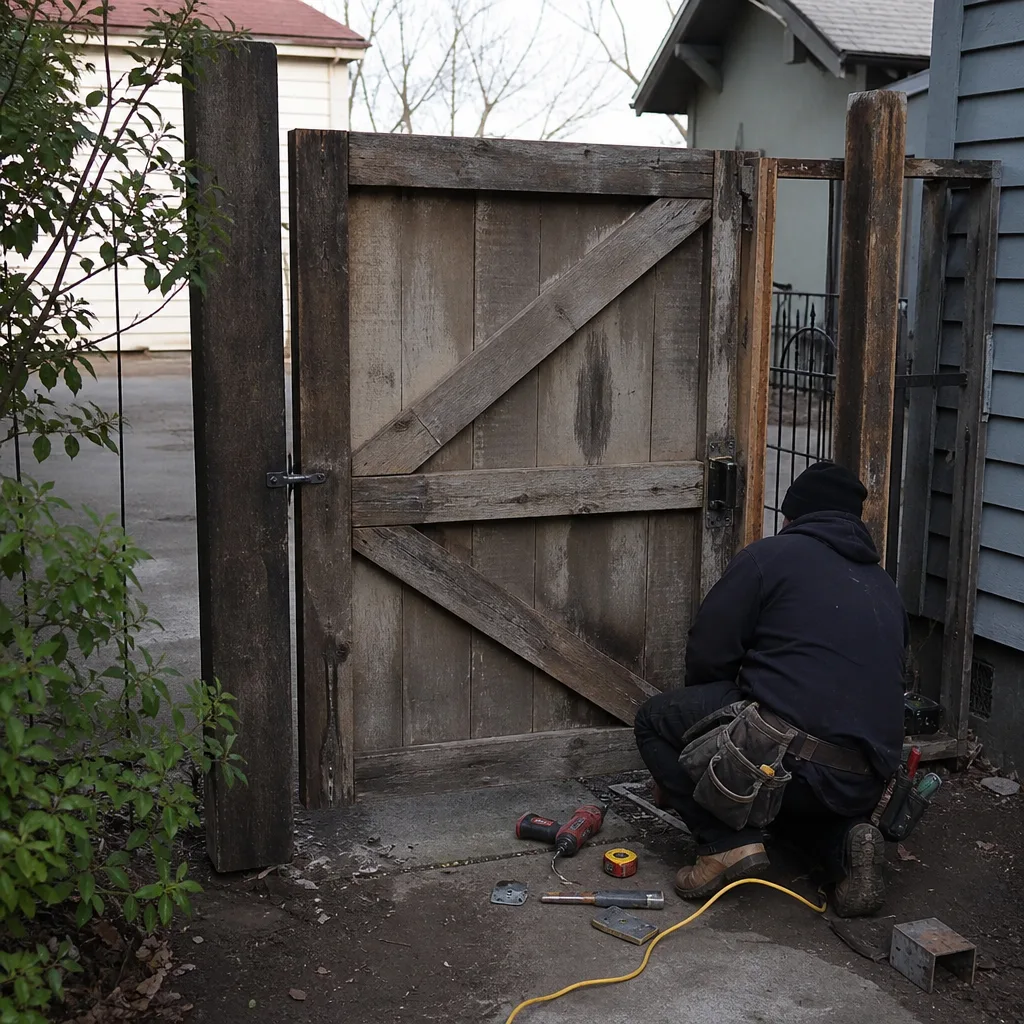 Before
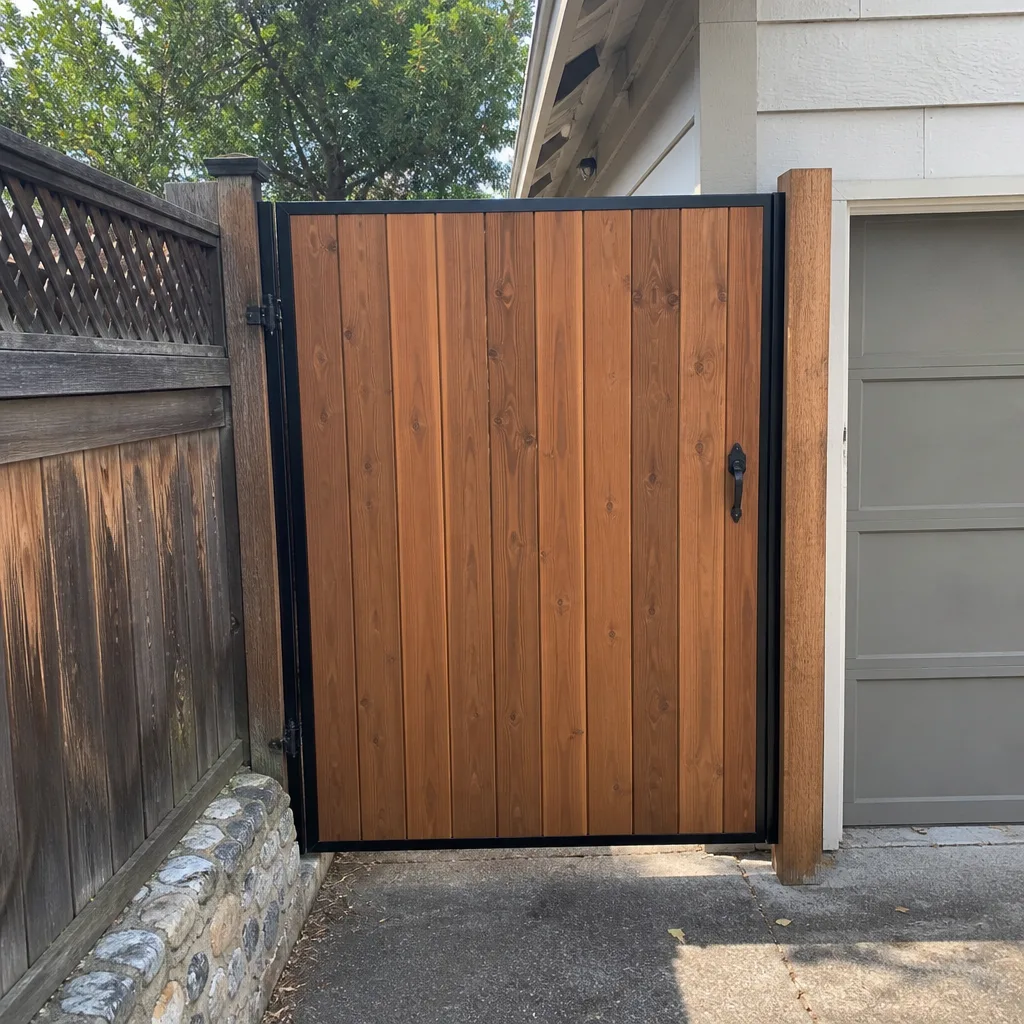 After
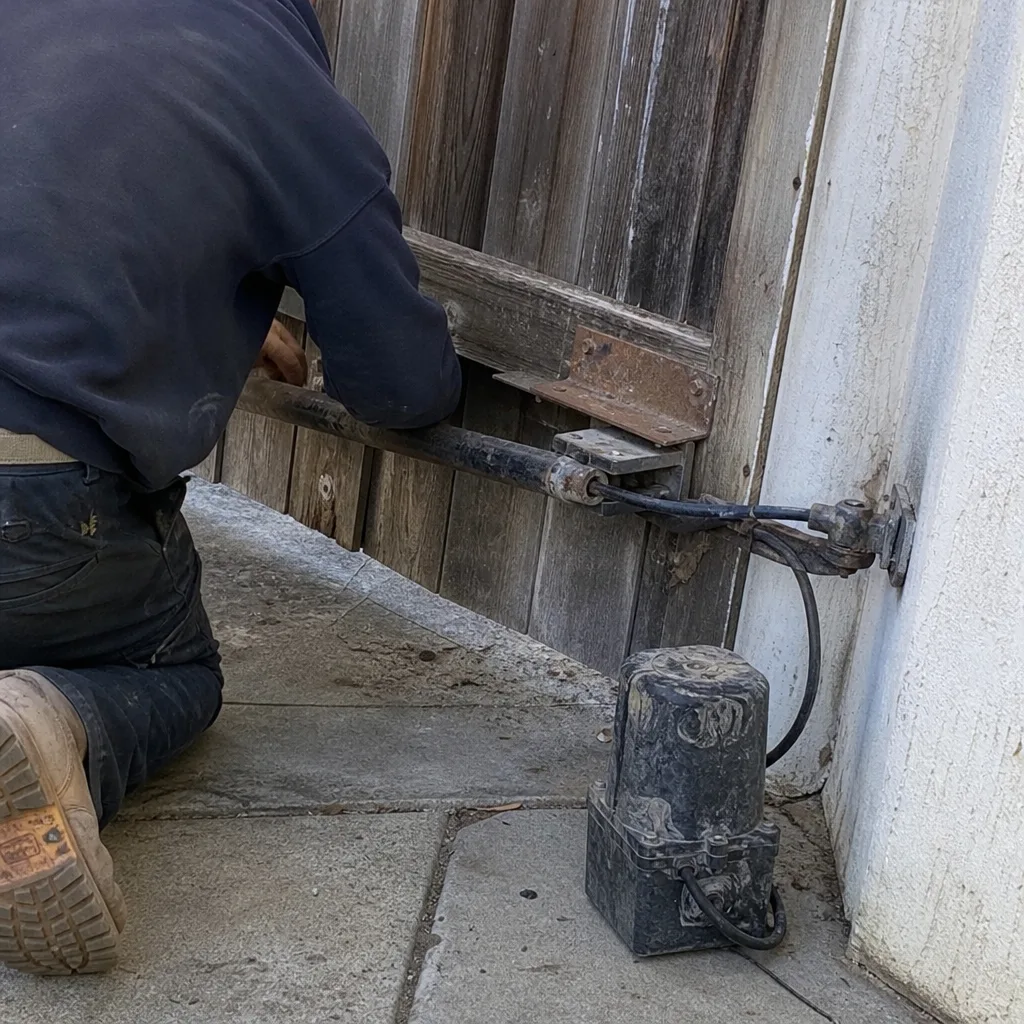 Before
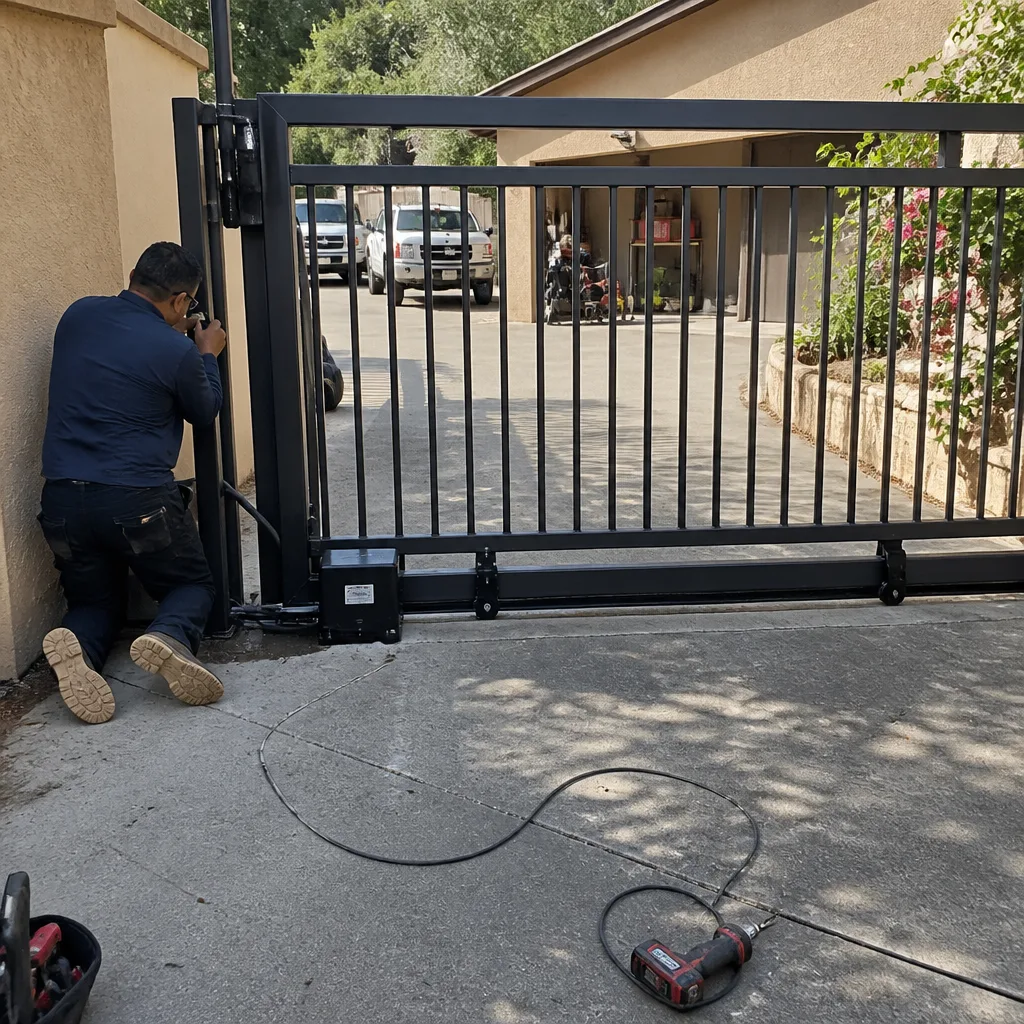 After
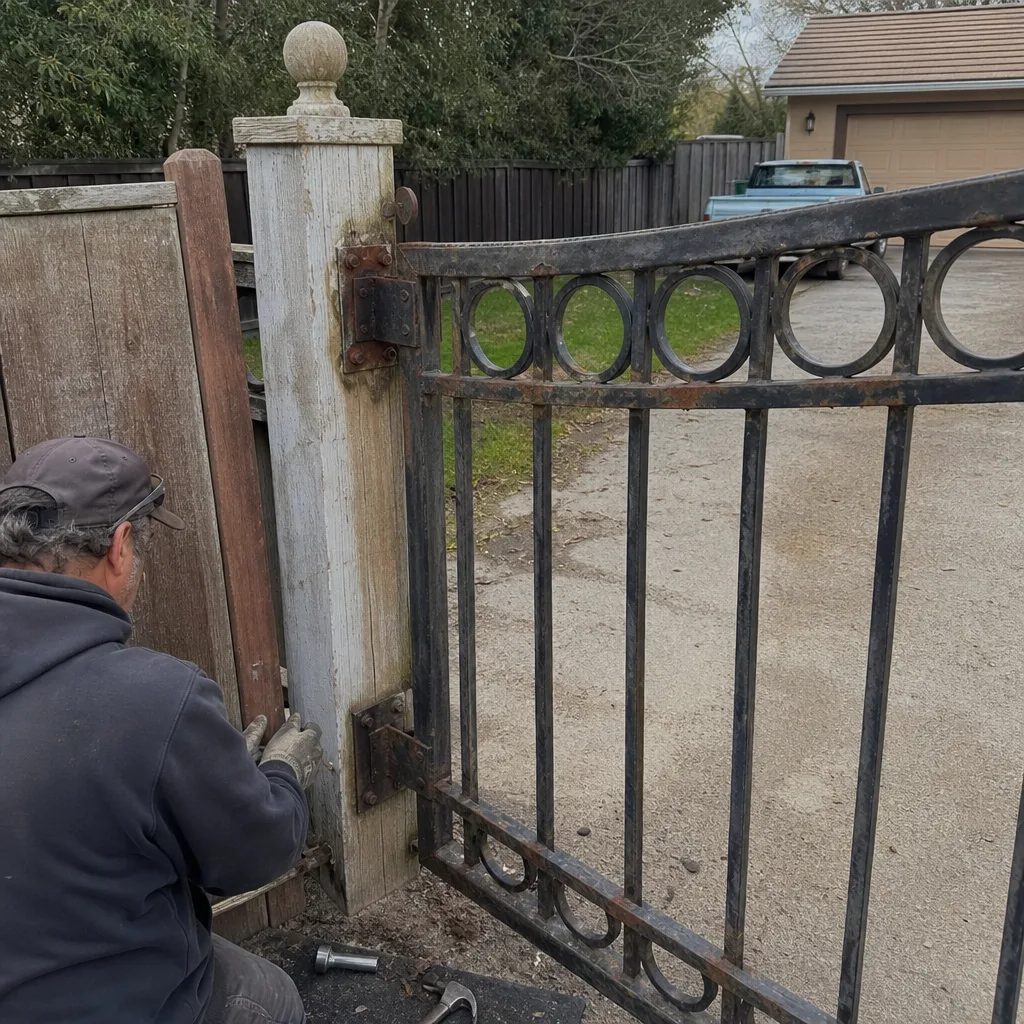 Before
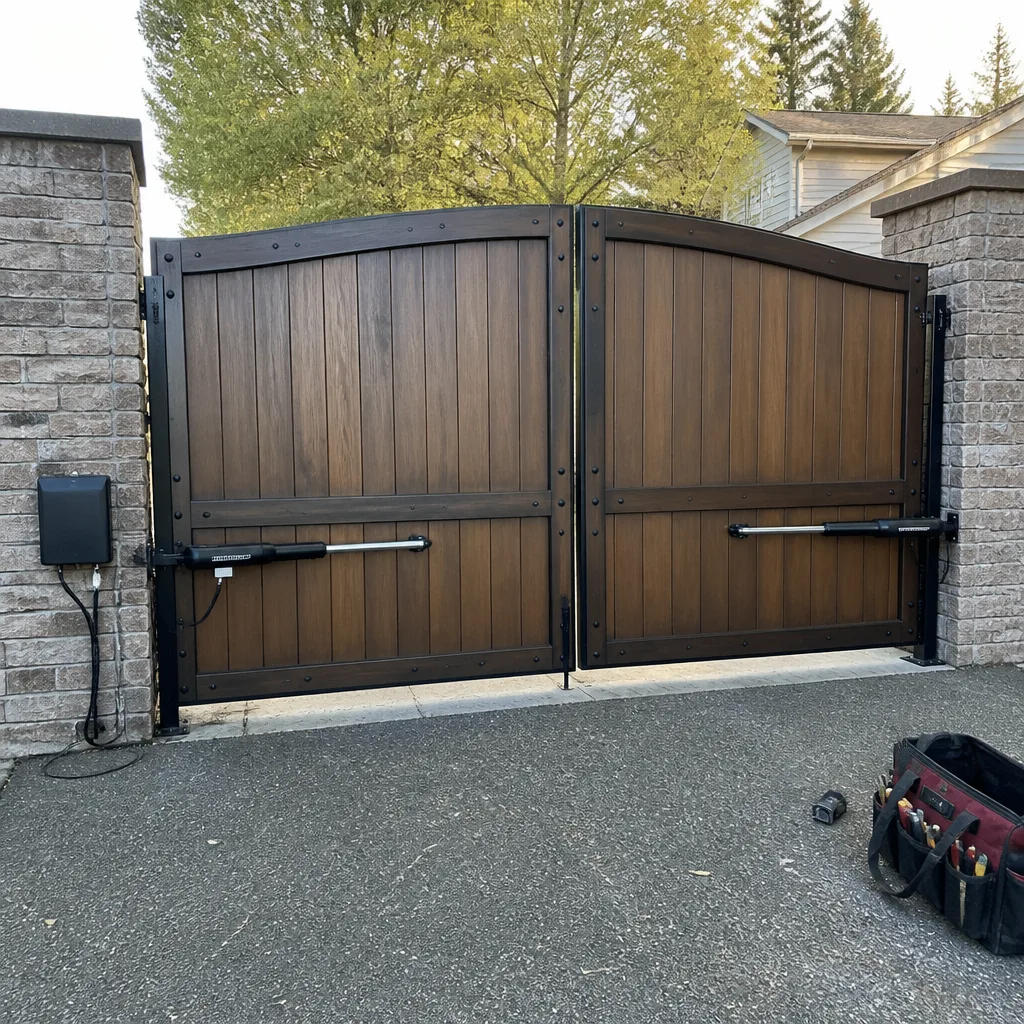 After