
Last updated November 2, 2026
 Wrought iron
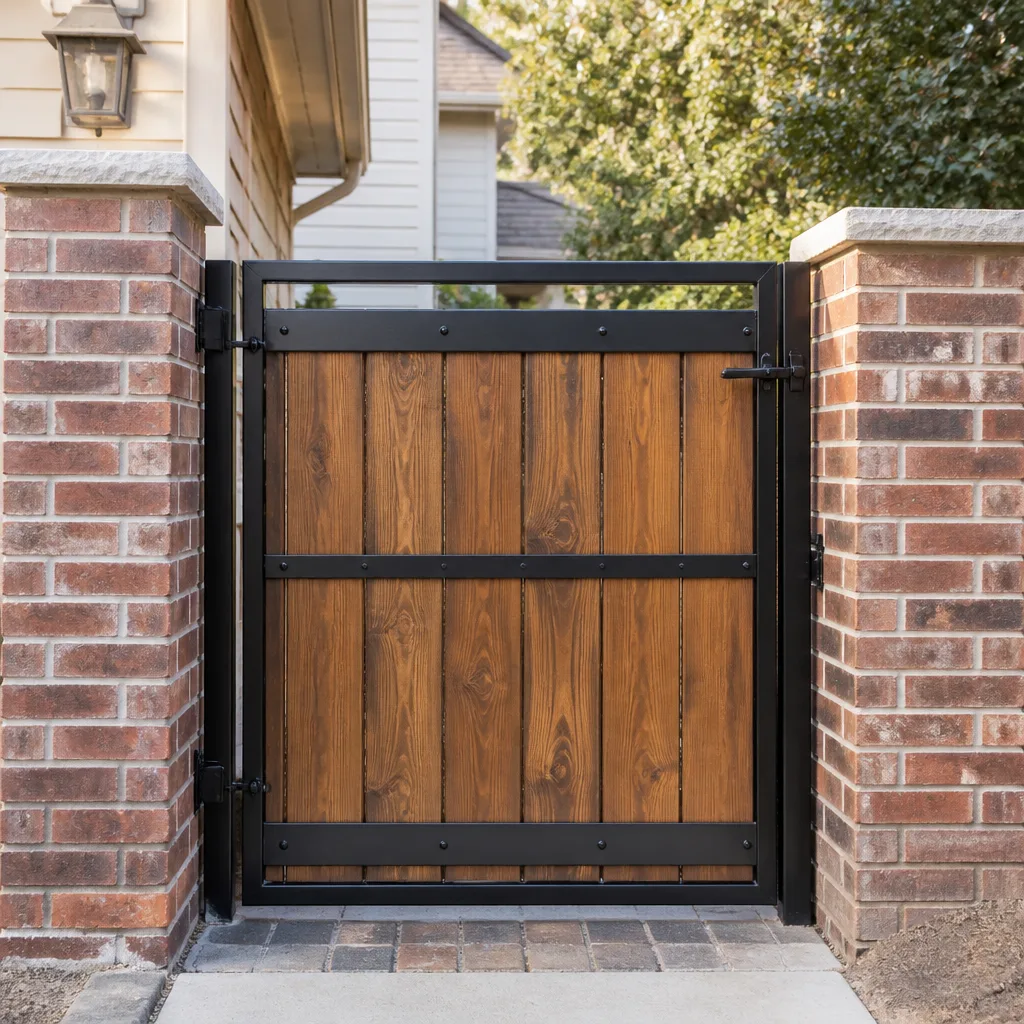 Wood & steel frame
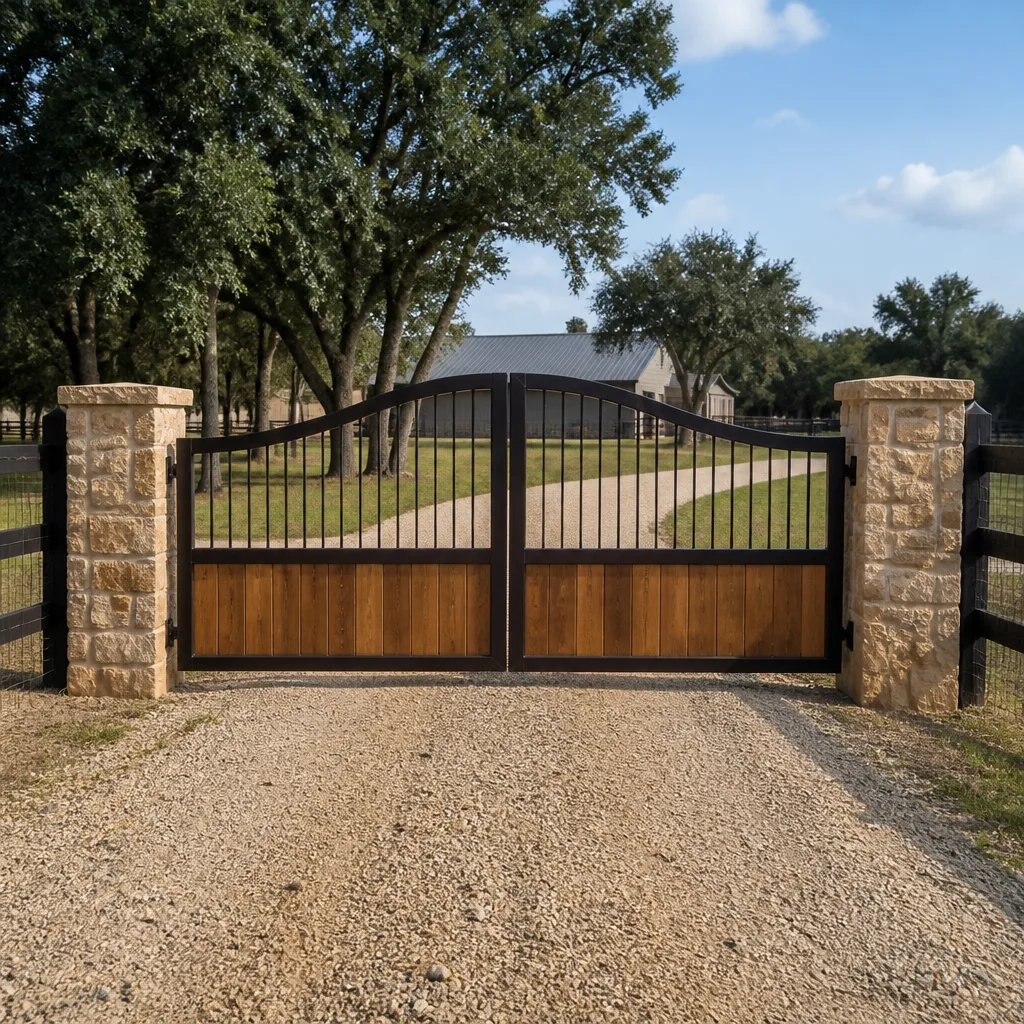 Farm & ranch
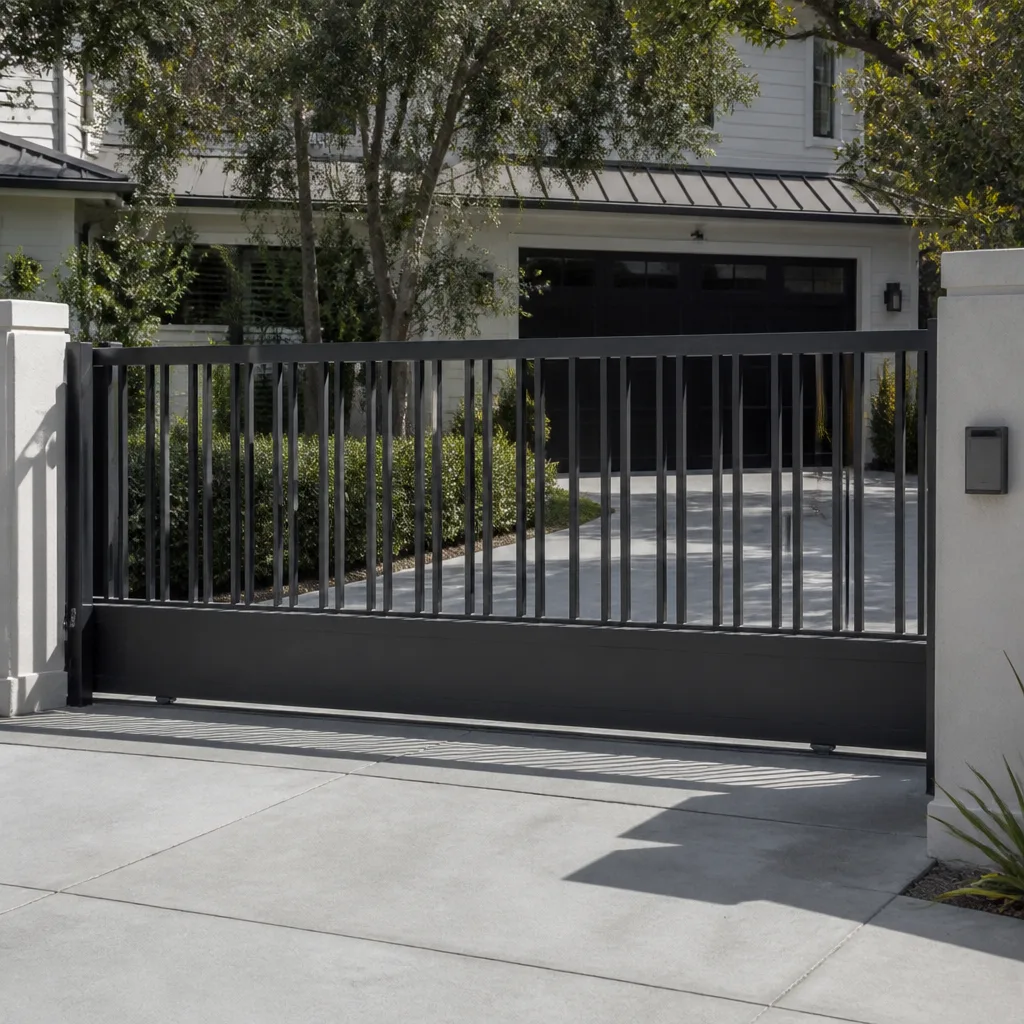 Sliding driveway gates
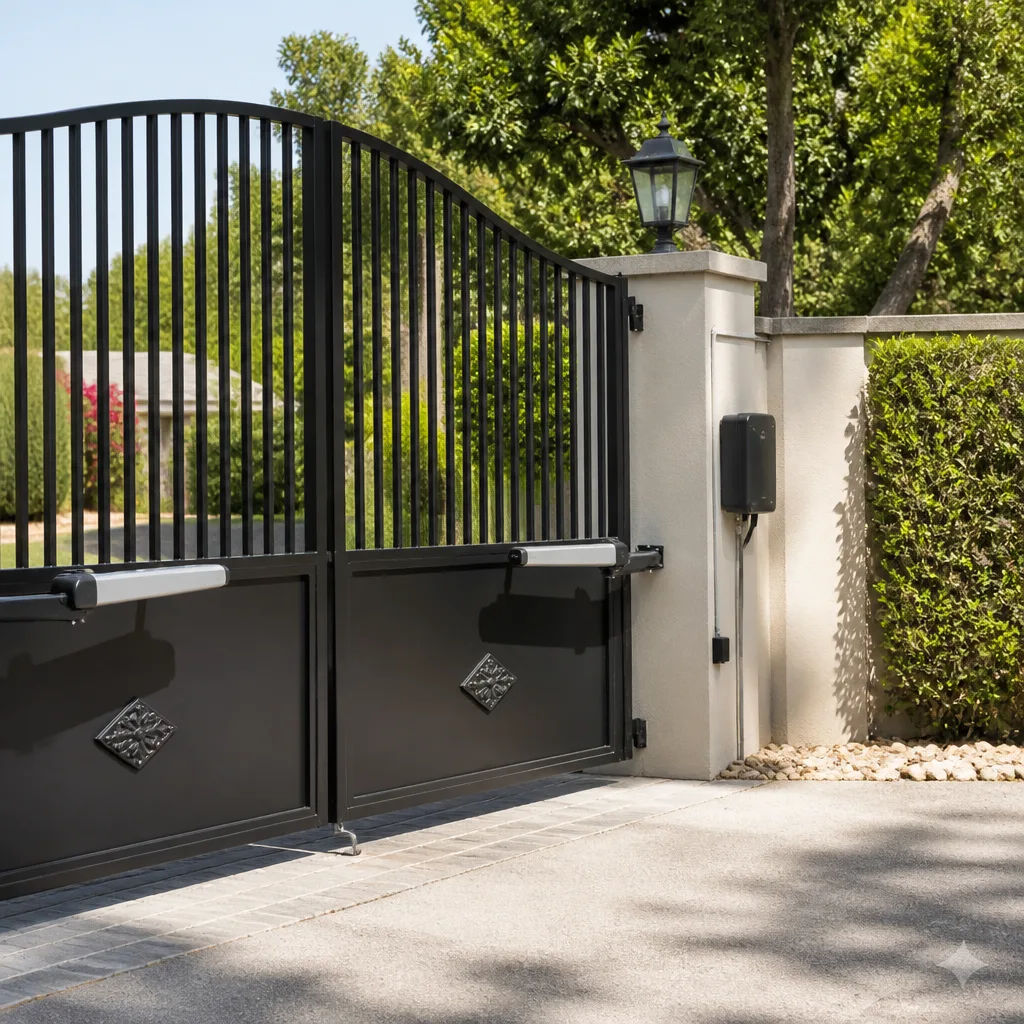 LiftMaster operators
Free on-site gate assessment - hinges, posts, and your LiftMaster or Nice gate operator checked before anything is quoted
The assessment is free and the quote is the invoice.
Get your free estimateGate Repair Troubleshooting: Common Problems and How to Fix Them
Here’s a statistic that surprises most Crocker-Amazon homeowners: the most misdiagnosed gate problem is an operator that hums but won’t move. Roughly 70% of the time, that symptom gets blamed on a dead motor when the actual cause is a $12 capacitor or a drive chain that has seized from rust. The motor gets replaced, the gate still doesn’t move, and the customer is out several hundred dollars for a component that was never the problem. This guide teaches you to think in terms of power path, logic path, mechanical path, and safety path – the four subsystems that every gate, from a rural Ghost Controls opener to a Viking commercial swing arm, depends on. We’re Gate Repair Crocker-Amazon home specialists, and we wrote this because most gate troubleshooting advice online skips the diagnostic reasoning and jumps straight to parts swapping.
Quick Answer
Most gate failures trace to one of four root causes: interrupted power (tripped breaker, bad capacitor, low battery on solar systems), a safety sensor or limit switch fault, a mechanically bound drive component (chain, rack, hinge, wheel), or a failing control board. The fix requires identifying which subsystem failed before replacing anything – and starting your diagnosis at the power source, not the motor.
Styles & brands we work with
- Wrought iron
- Wood & steel frame
- Farm & ranch
- Sliding driveway gates
- LiftMaster operators
Table of Contents
- The Fault-Tree Method: Why Order of Diagnosis Matters
- Power Path Problems: The Overlooked First Step
- Safety Sensors and Limit Switches: Reading the LED Codes
- Why a Gate That Works ‘Sometimes’ Is More Urgent Than a Dead Gate
- Mechanical Drive Failures: Chains, Racks, Hinges, and Wheels
- Gate Weight, Balance, and Motor Strain: The Physics Nobody Checks
- Residential vs. Commercial Diagnostics: Two Different Checklists
- Common Mistakes to Avoid
- When to Call a Professional
- Frequently Asked Questions
The Fault-Tree Method: Why Order of Diagnosis Matters
A gate operator is a system of dependencies, not a box with a motor inside. When something fails, the symptom you see at the gate leaf rarely points directly at the failed component. That’s why random parts replacement is expensive and unreliable. The better approach is a fault tree: start at the power source and work downstream toward the mechanical load, testing each link before moving to the next.
- Confirm the operator is receiving power. Check the breaker, the disconnect switch, the battery voltage on solar systems, and the incoming AC voltage at the operator’s terminal strip. In Crocker-Amazon, we routinely find breakers tripped by rain intrusion into outdoor receptacles that have lost their weather gasket.
- Check the operator’s status LEDs and diagnostic display. Most LiftMaster, Viking, FAAC, and Linear operators report faults as LED blinks or numeric codes. A motor overcurrent fault reads differently from a photo-eye obstruction or a limit-switch time-out.
- Test the safety devices. Photo eyes, edge sensors, and loop detectors are designed to stop the gate when triggered. A dirty or misaligned photo eye will present exactly like a dead operator: the gate simply will not move.
- Isolate the mechanical drive. Disengage the operator (every automatic gate has a manual release) and push the gate leaf by hand. If it binds, drags, or requires surprising force, you have found a mechanical problem that will destroy any motor you install.
- Only now test the motor and capacitor. If power is present, safety devices are clear, and the gate swings or slides freely by hand, then the motor or its start/run capacitor becomes the prime suspect.
This order prevents the two most expensive mistakes we see in Gate Repair in Crocker-Amazon: replacing a motor to fix a $12 capacitor, and replacing a control board to fix a misaligned photo eye. The diagnostic sequence takes twenty minutes. The parts guessing takes days and costs real money.
Power Path Problems: The Overlooked First Step
Approximately one in three gate service calls begins with a power issue, not a mechanical failure. The clues are usually easy to spot if you know where to look. An operator that is completely dead – no display, no lights, no sound – almost always has an upstream power interruption. An operator that hums but will not start may have voltage present but too low to spin the motor, or a capacitor that has lost its ability to provide the starting jolt.
Here is what to check in order:
- The breaker or fuse. Gate operators are frequently wired to a dedicated circuit. A tripped GFCI breaker on an outdoor receptacle is common after rain or heavy morning fog – both regular occurrences in Crocker-Amazon’s climate.
- The disconnect switch. Many operators include a service disconnect near the unit. It gets bumped, corroded, or turned off by a landscaper and forgotten.
- Solar and battery systems. Ghost Controls and Mighty Mule solar operators depend on a healthy 12V battery. In our experience, batteries in coastal-adjacent environments age faster than manufacturers’ published lifespans due to temperature swings. A battery that reads 12.4V at rest can still sag below 10V under motor load, producing a hum or a weak click and no movement.
- Loose or corroded terminal connections. Vibration from gate movement gradually loosens screw terminals. Corrosion on outdoor connections adds resistance, which drops voltage exactly when the motor draws its highest starting current.
- The capacitor. Single-phase AC motors (the vast majority of residential and light-commercial swing and slide operators) cannot start without a functional start capacitor. A failing capacitor produces a hum, a slow start, or a motor that attempts to move but stalls. This is the $12 part behind the 70% misdiagnosis rate.
Before calling for service, visually confirm the breaker is on and the disconnect is engaged. If you have a multimeter, verify voltage at the operator. If voltage is present and the unit still hums without moving, you are most likely looking at a capacitor or a mechanical bind – not a motor. For Electric Gate Repair in Crocker-Amazon, we bring bench testers and spare capacitors for all nine brands we service, so the diagnosis happens in minutes rather than days.
Safety Sensors and Limit Switches: Reading the LED Codes
Modern gate operators refuse to move when a safety input is active. This is by design – UL 325, the safety standard governing automated gates, requires that a gate stop or reverse when a monitored safety device detects an obstruction or fault. The practical consequence: a dirty photo eye, a nicked loop wire, or a stuck limit switch can immobilize a completely healthy gate. Homeowners who don’t know this assume the operator is broken.
The fastest path to a diagnosis is the operator’s LED indicator. Brand conventions vary, but the logic is consistent across Linear, Viking, LiftMaster, and DoorKing units:
- Linear operators: A blinking red LED on the control board typically indicates an activated safety input. On many Linear swing operators, the photo eye input reports as a specific LED that stays lit when the beam is blocked and blinks when the eye is misaligned or obscured by dirt.
- Viking swing and slide operators: Viking boards label their safety inputs clearly, and a lit “PHOTO” or “SAFETY” LED usually means the input is open and the gate is being held. Look for a separate “LIMIT” LED that should toggle as the gate reaches each end of travel.
- DoorKing operators: DoorKing boards use diagnostic LED patterns on the main control board and frequently display the state of the reverse loop, exit loop, and close limit on the board itself. A loop detector showing constant detect means a shorted or cut loop wire in the driveway, not a board failure.
- FAAC operators: FAAC’s self-diagnostics are unusually specific. The LED status on the board maps to input states on the terminal strip, which makes it straightforward to see whether a stop circuit, safety edge, or photocell is holding the gate open.
The counterintuitive part: when a safety sensor fails, the gate’s default behavior is to do nothing or to reverse mid-cycle. It will not move forward into what the board believes is an obstruction. That looks like a broken gate. The fix is often as simple as wiping the photo eye lens, straightening a bent mounting bracket, or clearing debris from the gate’s travel path.
Limit switches fail differently. When a limit switch wears out, the gate typically overshoots its end-of-travel, slams, or creeps. On hydraulic Viking and FAAC units, a failed limit switch can cause the pump to run continuously against the closed stop, overheating the hydraulic fluid and eventually damaging seals. This is the kind of progressive failure that a visual inspection or an LED check catches early.
Why a Gate That Works ‘Sometimes’ Is More Urgent Than a Dead Gate
A gate that fails completely is stationary, safe, and predictable. A gate that works on Tuesday and refuses to open on Wednesday is worse – it is committing you to an unpredictable failure, and it may be telling you that a component is days away from permanent failure. Intermittent faults are progressive by nature. The component does not heal; the interval between failures shrinks.
Common causes of intermittent operation, in order of frequency:
- Loose or corroded wire terminations. Thermal cycling expands and contracts the connection, so the gate works cold and fails hot, or works in the morning and fails in the afternoon sun. Crocker-Amazon’s temperature swings make this pattern common.
- Failing capacitors. A capacitor can lose capacitance gradually. The motor starts fine on a warm day and barely starts on a cold morning. Eventually it stops starting at all, and the repeated failed starts overheat the motor windings.
- The gate leaf drifting out of alignment. As hinges wear, the gate sags, the latch binds, and the operator works only when someone has recently pushed or lifted the gate. The operator appears inconsistent; the cause is mechanical wear accumulating silently.
- Radio interference or a failing receiver. Remote controls work erratically when the receiver’s antenna is damaged, or when a new nearby device (a security camera, a WiFi extender, a neighbor’s new opener) broadcasts on a conflicting frequency.
- Loop detector issues. On commercial systems with exit loops, a marginal loop connection can cause the gate to open sometimes and ignore vehicles at other times. The gate itself is working. The trigger is unreliable.
The takeaway: an intermittent gate is a diagnostic opportunity, not an annoyance to live with. The fault is usually identifiable while the gate is misbehaving if you know which subsystem to observe. Document what you see – the direction of travel, the time of day, the temperature, and whether the opener hums or stays silent. That detail cuts the diagnostic time dramatically and prevents us from chasing a fault that will not reproduce in the driveway.
Mechanical Drive Failures: Chains, Racks, Hinges, and Wheels
Electrical problems get all the attention, but the mechanical components are where long-term neglect shows up first. A chain that has never been lubricated stretches and rusts in Crocker-Amazon’s coastal air. Rack teeth wear unevenly. Hinge bearings oval out. Slide-gate wheels flatten or seize. Every one of these conditions increases the load on the motor until a thermal overload trips or the drive gear strips.
Here is what to inspect, and what each symptom tells you:
- Chain sag or rust. On slide gates driven by chain, a sagging or rusted chain skips teeth or binds mid-travel. A gate that jerks while moving, or makes a rhythmic clank, points to the chain. Chains need periodic tensioning and lubrication.
- Worn rack teeth. If the gate moves smoothly for part of the travel and then slips or grinds, the rack gear – the toothed bar bolted along the gate – has a worn section. The motor will sound labored at the same point every cycle.
- Binding hinges on swing gates. A swing gate that sags visibly, scrapes the ground, or requires a manual lift to latch has a hinge problem. The operator will draw higher current, trip its thermal protection, and eventually burn motor windings or strip gears.
- Slide-gate wheels and track condition. Steel wheels on steel track rust and develop flat spots. A gate that shudders or makes a grinding noise while sliding is riding on failing wheels or a track obstructed by debris. Crocker-Amazon yards with heavy leaf litter see track obstruction often, especially in autumn.
- The manual release mechanism. Every automatic gate has a manual release for power outages. If the release is never exercised, its internal components seize. That is a problem when the power fails and you need to open the gate by hand.
One mechanical test is definitive: disengage the operator and move the gate by hand. A balanced gate in good mechanical condition moves with moderate, consistent effort in both directions. A gate that requires hard shoving, or that stops partway as if it is hitting something, has a mechanical fault – and no motor or control board replacement will fix it. This is where a full Gate Installation in Crocker-Amazon should be considered if the gate itself is old enough that multiple mechanical components are failing simultaneously.
Gate Weight, Balance, and Motor Strain: The Physics Nobody Checks
Electric gate motors are not designed to fight an unbalanced gate. They are designed to move a balanced load. When a gate is properly hung and balanced, a residential opener might draw 4 to 6 amps under load. The same opener, asked to move a sagging gate with failed hinges, draws 10 to 12 amps and trips its overload. The motor is doing nothing different – it is being asked to do impossible work.
Testing balance without special tools is straightforward:
- Disengage the operator using the manual release.
- Push the gate to its midpoint of travel and release it.
- Observe whether the gate stays put, drifts gently, or swings or slides on its own.
- Push the gate through its full range of motion and feel for resistance that changes by position.
A gate that runs away from the midpoint is out of balance. A swing gate that accelerates toward the closed position is dangerously heavy in that direction, and it will drive the operator harder in one direction than the other. A slide gate that consistently rolls back from center has a track or wheel issue.
The long-term consequence of running an unbalanced gate is predictable: the operator’s gears strip, the capacitor fails repeatedly, the motor windings overheat and short, or the control board fails from the constant overcurrent condition. In our service work across Crocker-Amazon, we often see operators that have already survived one motor replacement and are headed for a second because the underlying balance issue was never corrected. Fixing the balance is always cheaper than feeding the same operator a new motor every two years.
Residential vs. Commercial Diagnostics: Two Different Checklists
A homeowner with a Mighty Mule on a driveway and a property manager with a DoorKing on an apartment entry need different diagnostic approaches. The equipment shares basic principles, but commercial systems add layers of access control, safety redundancy, and traffic-cycle demands that residential systems do not face.
Residential systems – LiftMaster, Linear, Ghost Controls, Mighty Mule, and lighter Viking units – fail most often from:
- Battery and solar issues on rural or unpowered installations
- Photo eye misalignment and dirt
- Capacitor and remote-control receiver failures
- Hinge and wheel wear from daily use
- Weather exposure, especially rain intrusion into control boxes
A residential diagnostic pass can usually be completed with a multimeter, a visual LED check, and a manual push test. The system’s inputs are limited to a remote, a keypad, and maybe a loop or a photo eye.
Commercial systems – FAAC, BFT, DoorKing, heavier Viking applications – add layers that change the diagnostic priorities:
- Loop detectors and vehicle loops. Exit and safety loops are critical on commercial gates. A failing loop or detector causes phantom detections, failed detections, or a gate that reverses for no visible reason.
- Access control integration. Keypads, card readers, telephone entry systems, and fire department lock boxes all tie into the operator’s input terminals. A mis-wired access device can hold a gate open, prevent closing, or short an input.
- Duty cycle demands. An apartment gate may cycle 300 times a day. Hydraulic systems run hot, and thermal wear accelerates. FAAC and Viking hydraulic units require checking fluid level, pressure, and hose condition on a schedule residential units never need.
- Safety edge and photo eye redundancy. Commercial gates must meet stricter UL 325 requirements. Multiple safety devices are wired in series, and any one of them failing open disables the gate.
- Backup systems. Many commercial operators include battery backup, and the batteries degrade on a predictable calendar. A dead backup battery will not stop normal operation, but it will fail the next power outage.
The practical difference: a homeowner can often resolve a residential gate problem by cleaning a photo eye or resetting a breaker. A commercial property manager should not reset and ignore. A DoorKing or FAAC unit that trips a safety input or blows a fuse is reporting that something upstream is wrong. Finding out what on the first visit – instead of resetting and walking away – is the difference between a maintenance expense and a catastrophic failure at the entry.
Common Mistakes to Avoid
- Replacing the motor based on a humming sound. A hum means the motor is doing something – the problem is more likely the capacitor, a seized chain, or low voltage. Motor replacement should happen only after the mechanical drive has been disengaged and the gate manually moved to prove the load is free.
- Ignoring the breaker and disconnect. The cheapest fix in gate repair is turning something back on. Skipping this check wastes a service visit and embarrasses everyone. Check power before anything else.
- Cleaning or replacing the photo eye without checking alignment. A clean photo eye that is pointed at the fence instead of its receiver will still hold the gate open. Clean, then align, then verify the LED state on the board.
- Living with an intermittent gate. “Works most of the time” is not a repair strategy. Every intermittent failure is collecting damage toward a permanent breakdown, and the eventual failure usually happens on the day you need the gate most.
- Replacing the control board as a first step. Boards are expensive, and board failures are rarely the first thing to go. LEDs and diagnostic codes exist precisely so you can verify the board before condemning it. A sticking limit switch or a shorted loop will mimic a board fault.
- Lubricating everything with the same spray. Chains need chain lube. Hinge pins need grease. Electronics need no lubricant at all. Using WD-40 on a chain washes out the proper lubrication and invites rust.
- Adjusting the force or limit settings to compensate for a mechanical problem. Cranking up the force lets a binding gate keep moving for a while – and then the gears strip or the operator burns out. Force settings should be adjusted to match a healthy, balanced gate, not to overpower a broken one.
When to Call a Professional
Some gate problems are safe to identify and simple to fix on your own: resetting a breaker, cleaning a photo eye, tightening a visible terminal. But certain conditions warrant a call before you spend another weekend in the driveway. If the gate’s LED diagnostics point to the control board and you do not have a board-level schematic, stop. If the chain or rack is visibly damaged, or the gate has jumped its track, the repair involves stored tension and weight you do not want to be under. If the gate is hydraulic and the fluid is dark, milky, or leaking, the system needs professional service before the pump destroys itself. If your operator is a commercial unit with access control integrated, a misdiagnosis can leave an apartment or business entry insecure overnight. Gate Repair Crocker-Amazon offers free estimates in Crocker-Amazon – call (833) 842-7897 and we’ll diagnose the actual fault, not just the symptom.
Frequently Asked Questions
In about 70% of cases, a humming gate with no movement is caused by a failed start capacitor, a seized or rusted drive chain, or a mechanical bind in the gate itself – not a dead motor. Disengage the operator and push the gate by hand. If it moves freely, test the capacitor and the incoming voltage before touching the motor.
A gate that opens but refuses to close is almost always being held open by a safety input: a blocked photo eye, a triggered safety edge, or a vehicle loop detector that is stuck in detect. Check the photo eye lens and alignment first, then look at the board’s safety LEDs to identify which input is active. If the gate closes but immediately reverses, it’s the same class of problem: the board thinks an obstruction is present.
The definitive test is the manual release. Disengage the operator and move the gate by hand through its full range of travel. If it binds, scrapes, or requires unusual force, the problem is mechanical. If it moves easily and the operator still fails when re-engaged, you are looking at an electrical, sensor, or logic issue.
Intermittent operation is usually a progressive failure in a connection, capacitor, or mechanical component. Loose terminals, corroded wires, a failing capacitor, or a sagging gate hinge will all produce symptoms that come and go with temperature, time of day, or gate position. Document exactly when and how the gate fails; the details will cut the diagnostic time when you call for service.
Residential gate service calls in Crocker-Amazon typically range from $95 to $250 for diagnosis and minor mechanical or sensor repairs, with component replacements like capacitors, photo eyes, or limit switches adding parts cost on top. Operator replacement, control board work, or drive system repairs can run higher depending on the brand and model. Call (833) 842-7897 for an exact quote – estimates are free.
We service LiftMaster, FAAC, BFT, Linear, Viking, Ghost Controls, DoorKing, Elite, and Mighty Mule – nine brands spanning residential driveway systems and commercial entry systems. That breadth means we already know the failure modes and diagnostic codes for your equipment before we arrive.
The Bottom Line
Gate troubleshooting is a sequence, not a guess. Power first, then safety inputs, then the logic board, then the mechanical drive. The order matters because each upstream subsystem can mimic the failure of the one below it. Most gate problems – a humming operator, a gate that refuses to close, an intermittent failure – resolve to a simple cause: a dirty photo eye, a failing capacitor, a rusted chain, a loose terminal. The expensive failures happen when a simple cause is left to compound. Gate Repair in Crocker-Amazon covers the full range from Ghost Controls driveway openers to DoorKing commercial entry systems. And when the diagnosis points to a gate that has outlived its frame, Gate Installation in Crocker-Amazon is available through the same team. For Electric Gate Repair in Crocker-Amazon, call (833) 842-7897 for a free estimate – diagnosed, not guessed.
Written by the team at Gate Repair Crocker-Amazon, serving Crocker-Amazon since 2016.
See the difference
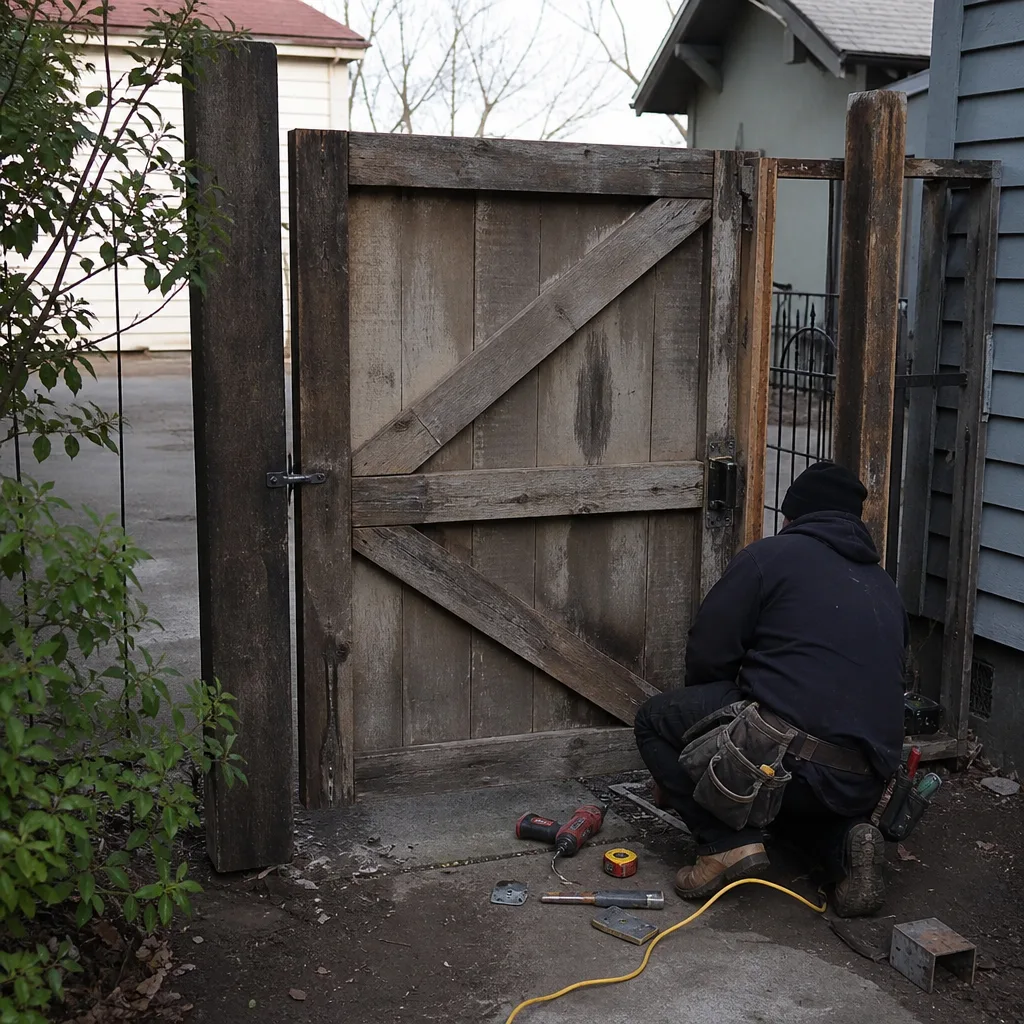 Before
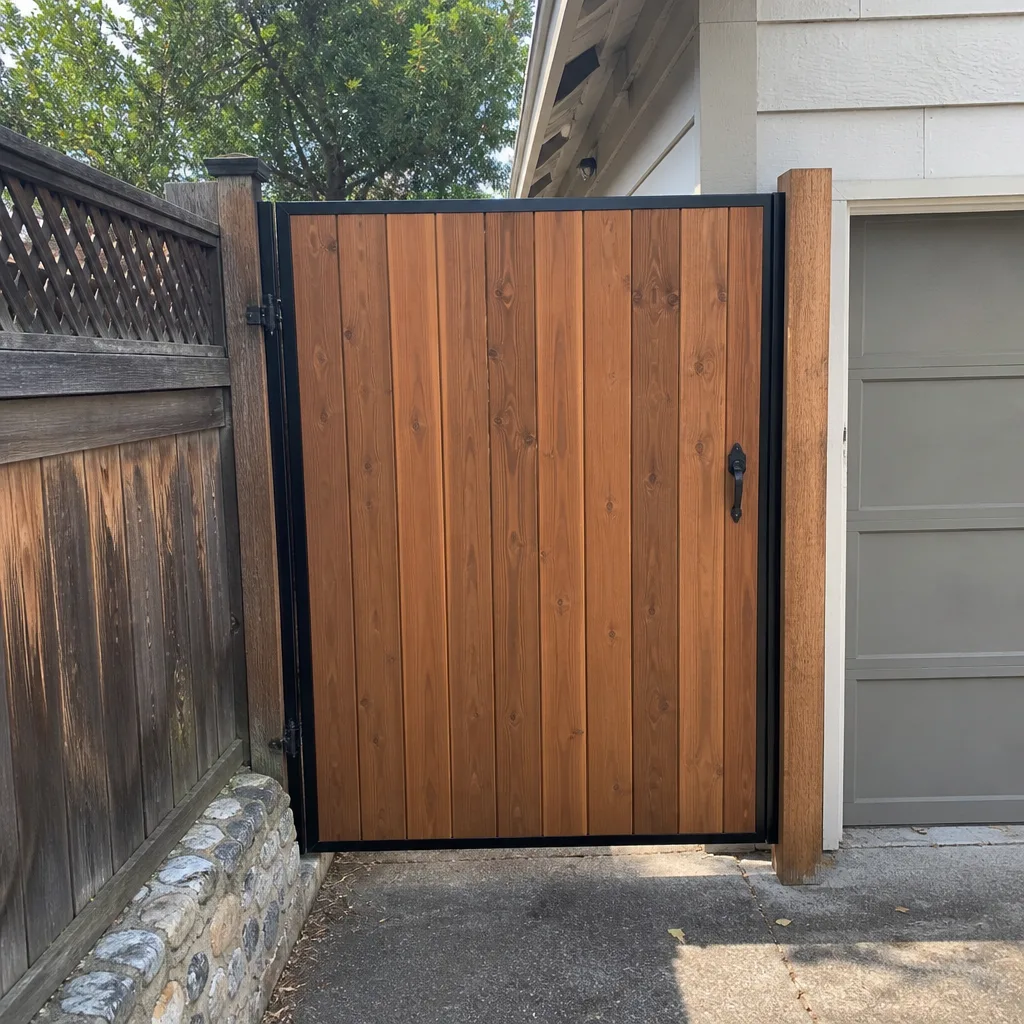 After
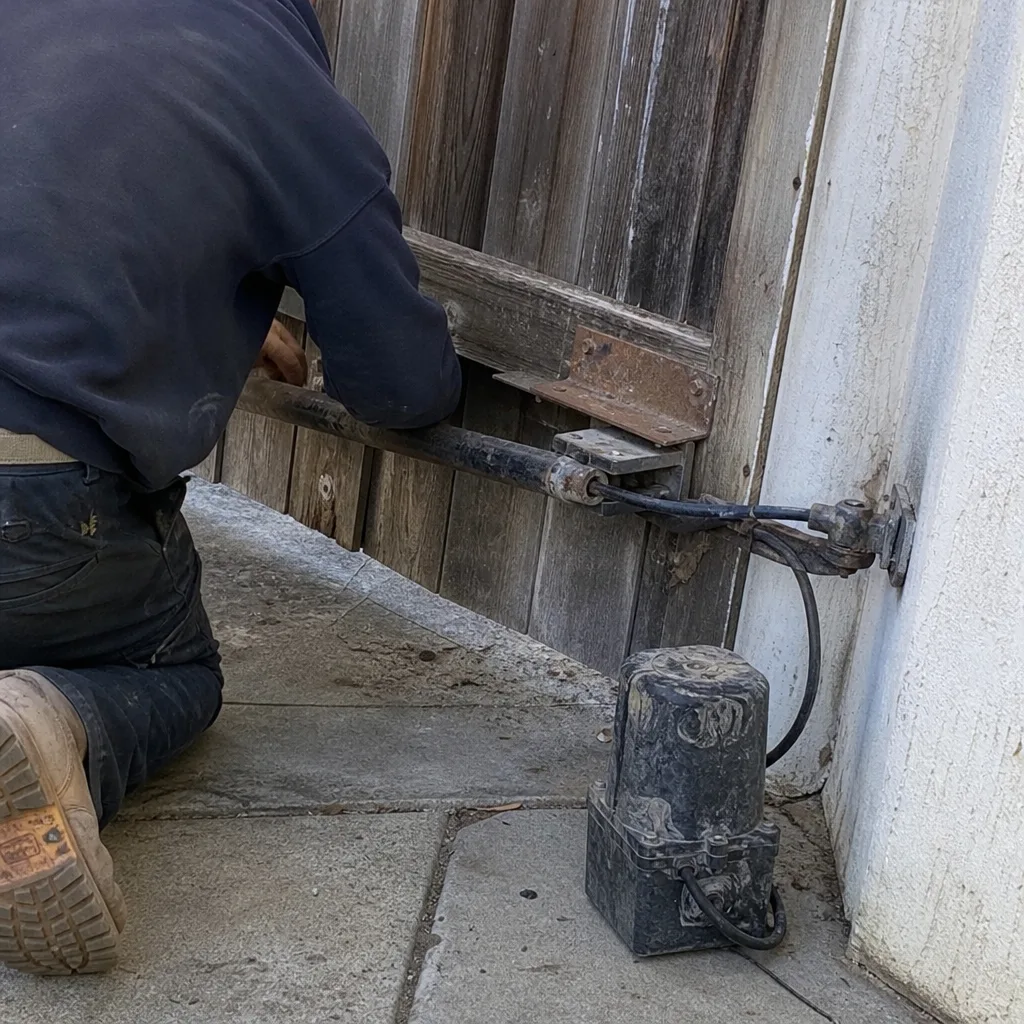 Before
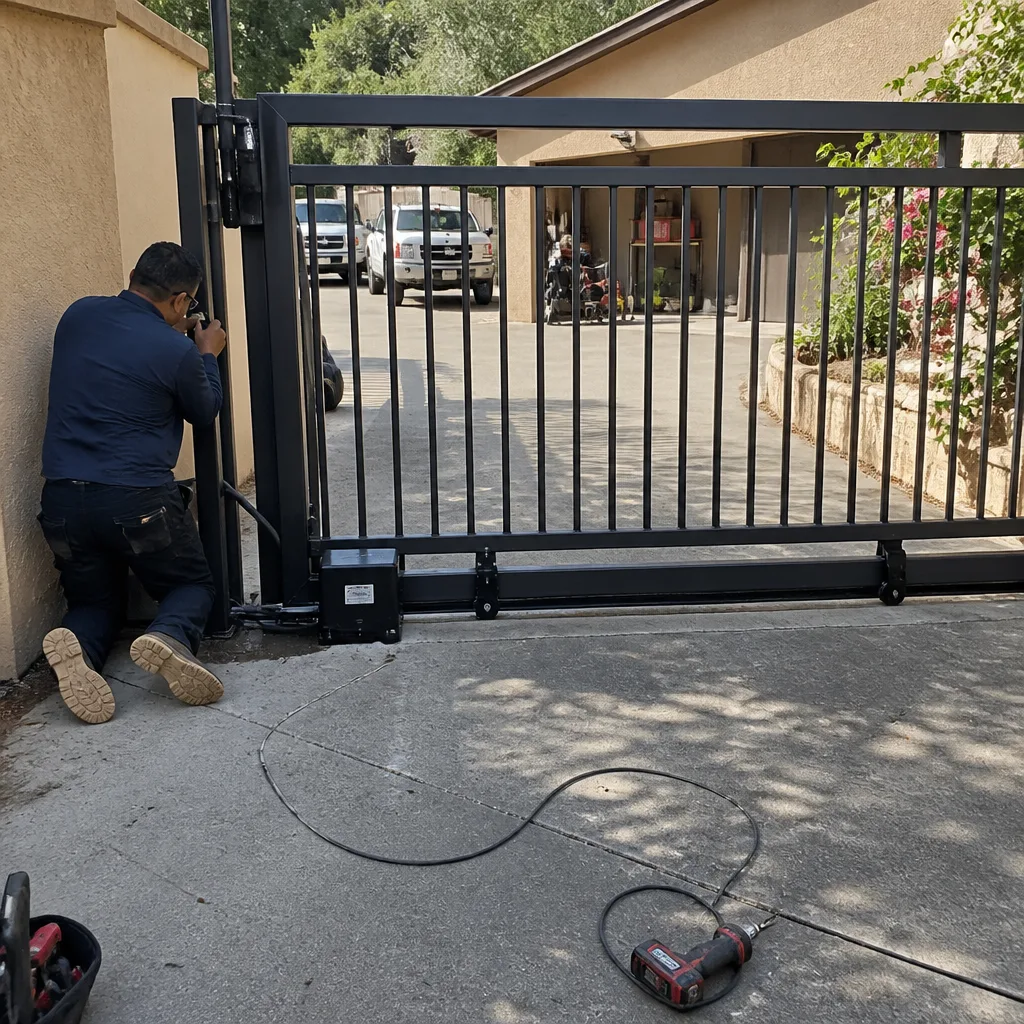 After
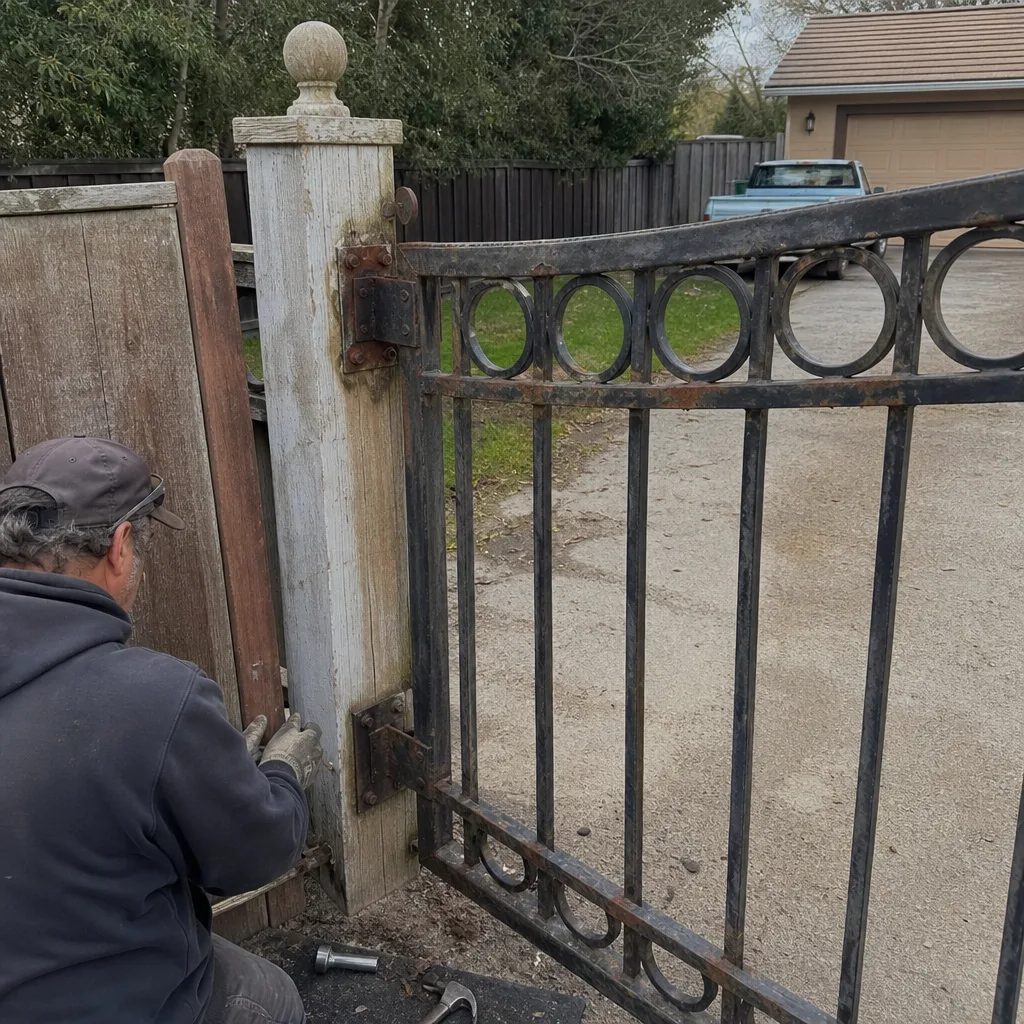 Before
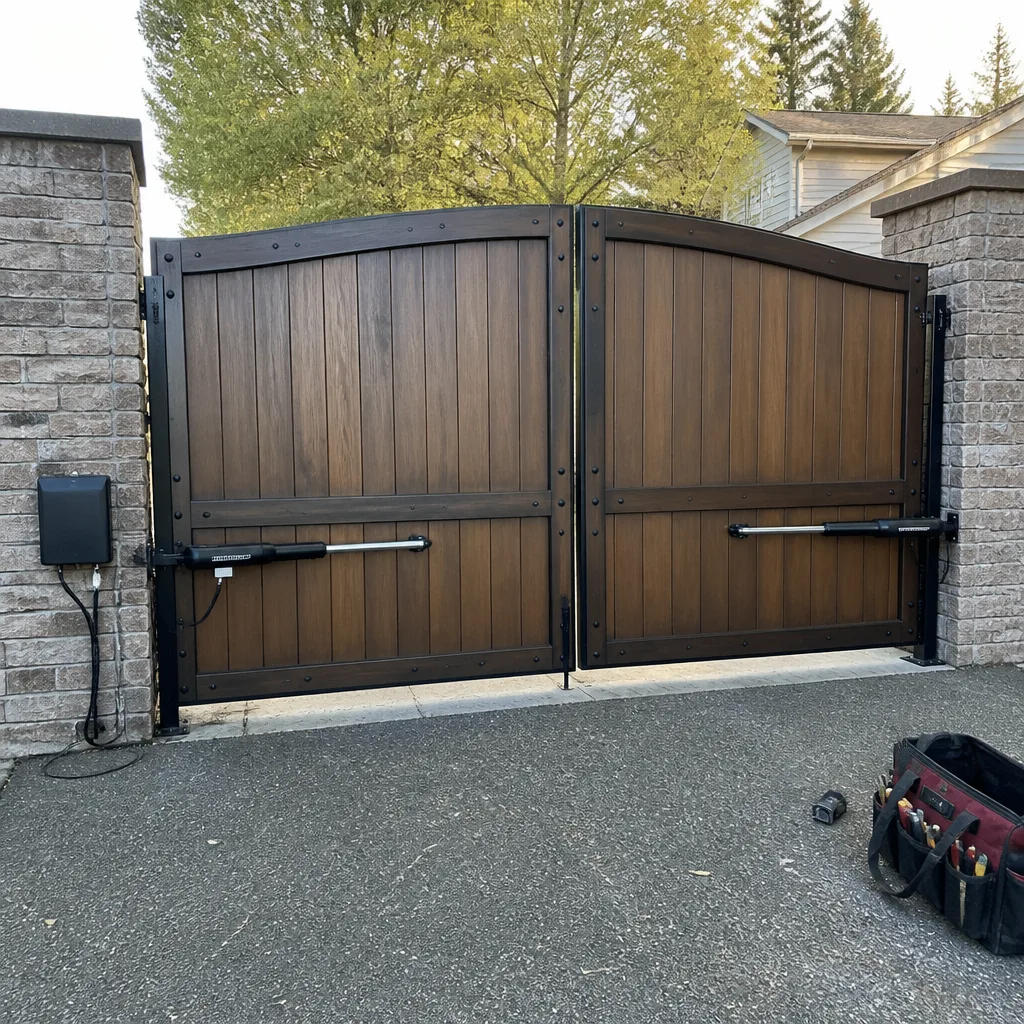 After