
Last updated November 2, 2026
 Wrought iron
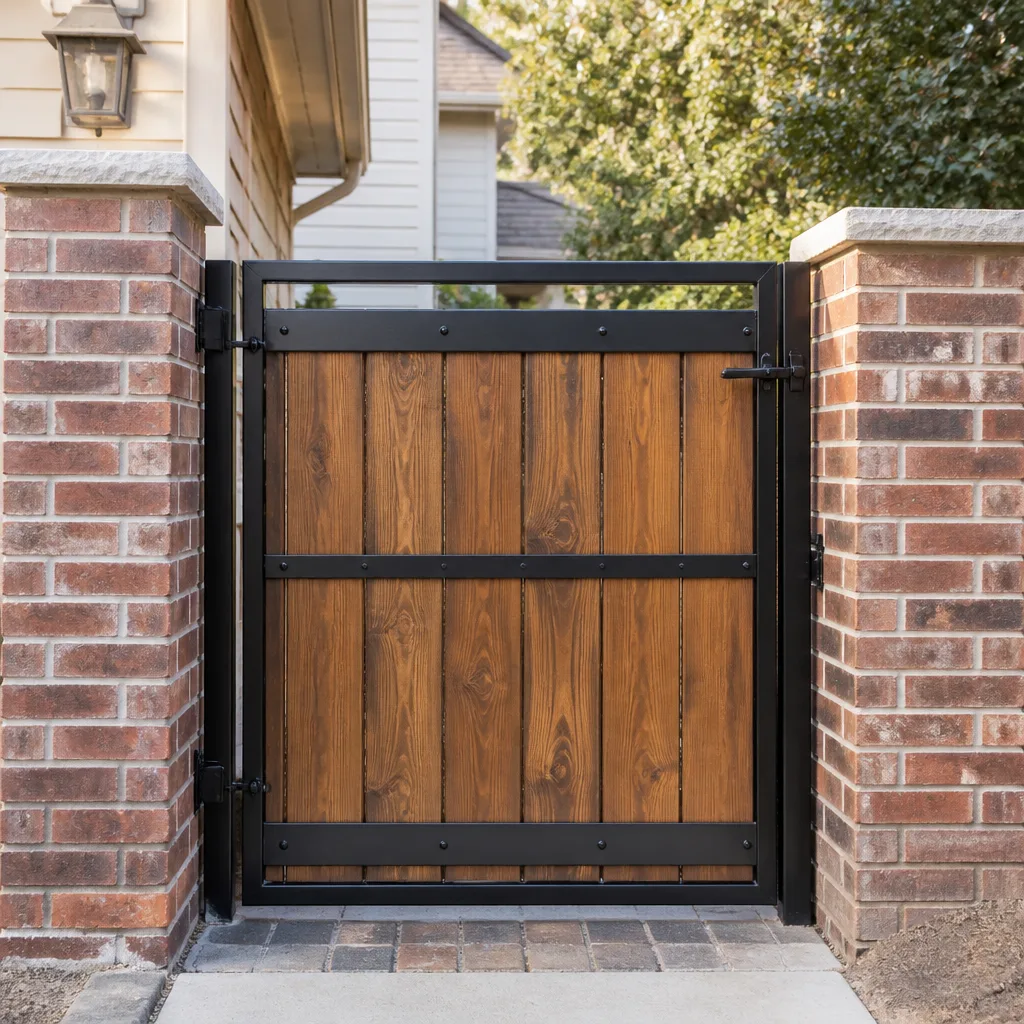 Wood & steel frame
 Farm & ranch
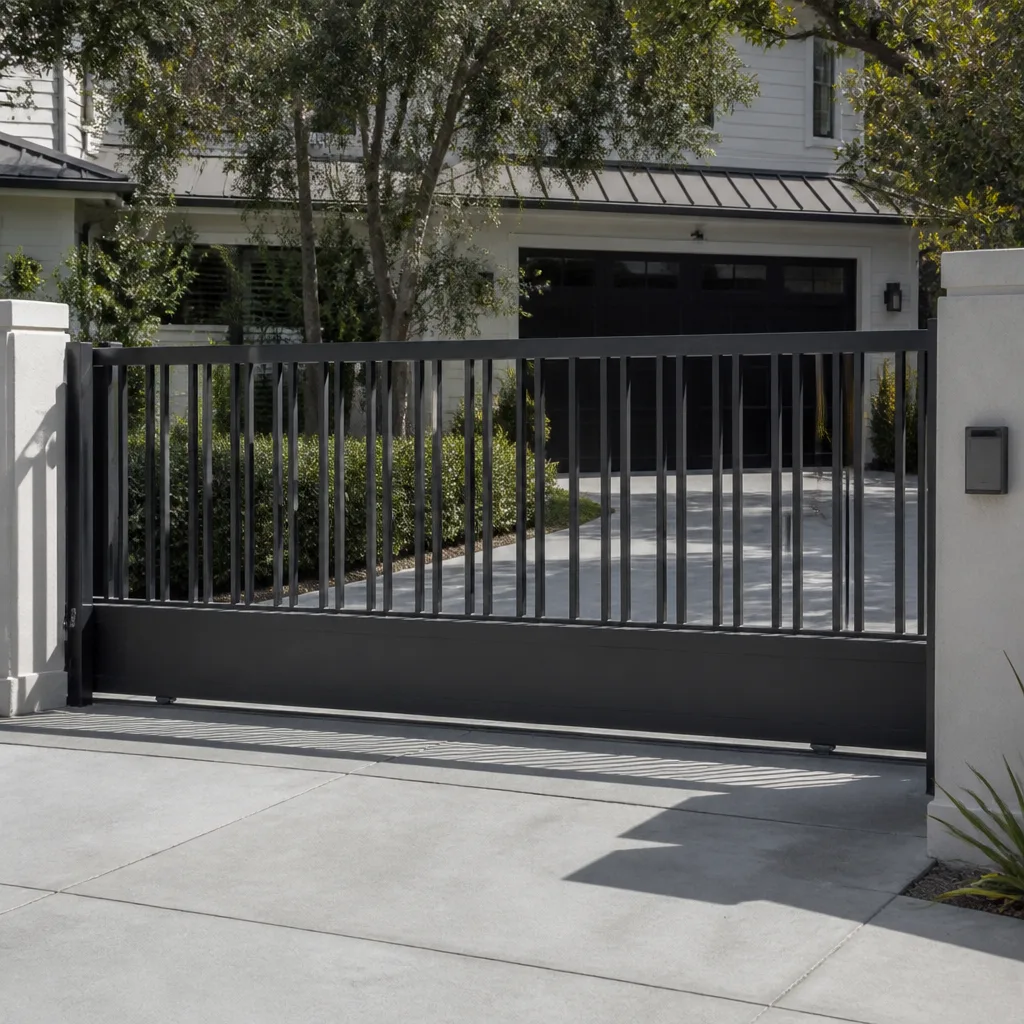 Sliding driveway gates
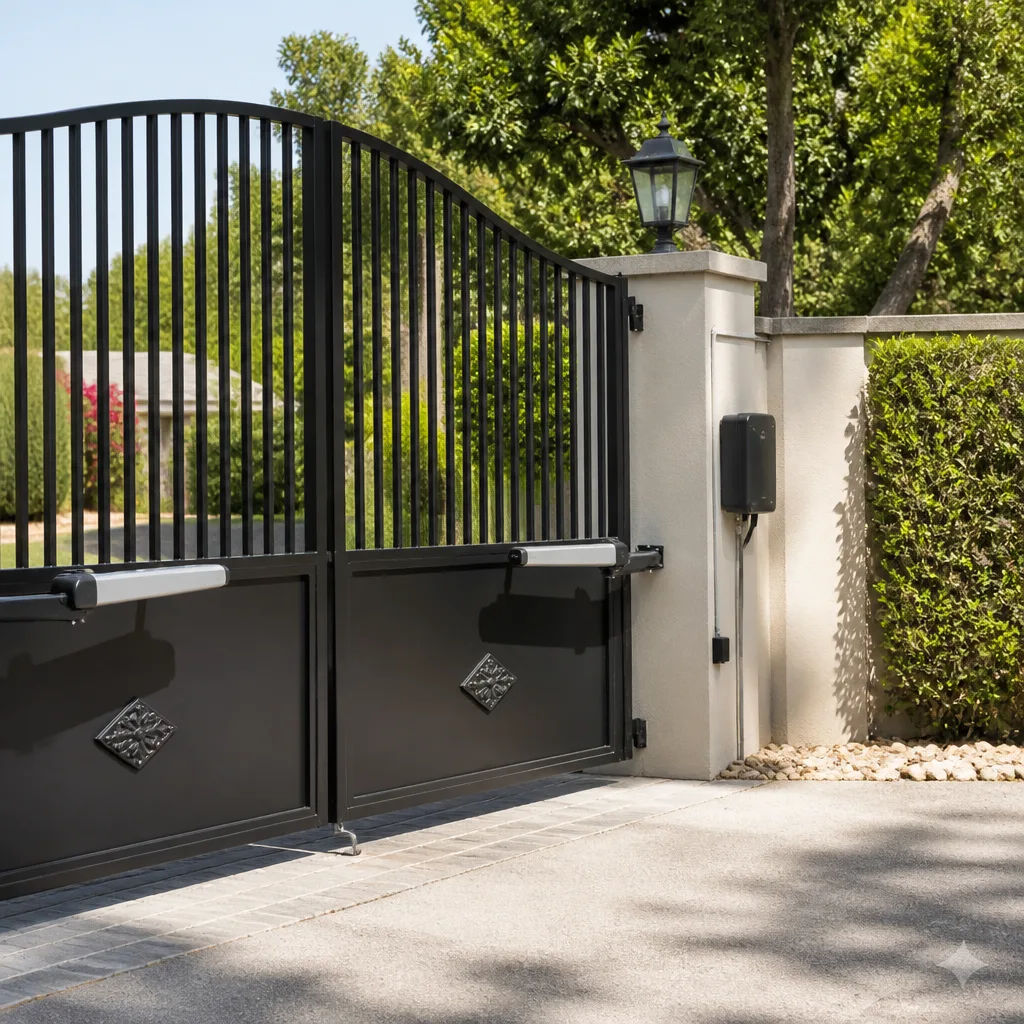 LiftMaster operators
Free on-site gate assessment - hinges, posts, and your LiftMaster or Nice gate operator checked before anything is quoted
The assessment is free and the quote is the invoice.
Get your free estimateGate Repair Emergency Preparedness Guide for Crocker-Amazon Homes
Here’s the counterintuitive truth about gate failures in Crocker-Amazon: the most dangerous breakdown isn’t the one that happens when you’re home with a charged phone and a full schedule. It’s the failure that occurs at 11:40 PM during a PG&E Public Safety Power Shutoff, when your car is inside the property and your gate has silently lost its backup battery. Most homeowners discover their manual release doesn’t work, or they can’t find it, at exactly the moment they need it most. This guide, along with our Gate Repair Maintenance Checklist for Crocker-Amazon Homeowners, gives you the three-layer response plan, built from years of diagnosing gate failures across Crocker-Amazon’s hillside streets and flatland blocks, so you’re never stuck on either side of your own gate.
Quick Answer
A stuck gate becomes a true emergency when it traps a vehicle or blocks emergency access, and the fix usually starts with the manual release mechanism, not the motor. Every gate owner in Crocker-Amazon should test their manual release twice a year, verify their battery backup holds at least 12.5 volts under load, and keep a physical gate emergency card in the vehicle with model number, release location, and a technician’s number. If your gate won’t move after releasing the operator, the problem is mechanical (a broken wheel, hinge, or track), and that’s when you call our Gate Repair services rather than forcing it.
Styles & brands we work with
- Wrought iron
- Wood & steel frame
- Farm & ranch
- Sliding driveway gates
- LiftMaster operators
Table of Contents
- The Three-Layer Emergency Plan
- Manual Release Operation by Operator Type
- Battery Backup Testing and Replacement
- Holding a Gate Open in a Power-Out Situation
- The After-Emergency Inspection Checklist
- Building Your Gate Emergency Card
- Crocker-Amazon Specific Considerations
- Common Mistakes to Avoid
The Three-Layer Emergency Plan
A gate emergency plan isn’t a single action. It’s three layers that work together, and each layer buys you time or access when the others fail. We’ve seen this structure hold up across every gate brand we service, from electric gate systems on steep Crocker-Amazon driveways to manual gates on flat lots near Balboa Park.
Layer One: The Manual Release
Your operator’s manual release is the physical override that disconnects the gate from the motor, letting you push or slide it by hand. This is your first tool in any power-out or motor-failure scenario, and it works with zero electricity. The catch is that manual releases differ by operator type, and if you’ve never tested yours, you don’t actually know where it is or how it functions. We recommend testing the release once in calm conditions, then again six months later, so the motion is muscle memory.
Layer Two: The Battery Backup
Battery backup systems on gate operators are designed to hold enough charge for roughly 10 to 30 cycles, depending on gate weight and battery age. That sounds adequate until you factor in PG&E’s PSPS events, which have averaged 6 to 14 hours per event in the Bay Area. A battery that hasn’t been load-tested in 12 months may deliver only 3 to 5 cycles before voltage sags below the threshold the control board needs. Layer two is about verifying the battery actually works before the grid goes down.
Layer Three: The Emergency Card and Contact
The third layer is preparation for the moment when manual release fails and battery backup is dead. That’s a physical card, kept in the vehicle, with your gate model number, release location, and the number of a technician who knows your brand of equipment. It lives in the glovebox, not in a phone that may be at 4% battery during a shutoff. This layer is what turns a 90-minute panic into a 5-minute call.
For a full look at how we approach gate repair in Crocker-Amazon, including diagnostics for stuck gates, see our main service page.
Manual Release Operation by Operator Type
Manual release mechanisms are not universal. Slide gates, swing gates, and vertical lift gates each disengage differently, and using the wrong technique on the wrong operator can damage the release assembly or leave you unable to re-engage the gate. Knowing your operator type is the first step, and it’s a question we ask on every Gate Repair Crocker-Amazon home service call.
Slide Gate Operators
- Locate the release handle on the operator housing, typically a red or yellow lever or a keyed cylinder on the side.
- Turn or pull the handle to disengage the drive gear from the rack. On FAAC and BFT slide operators, this is often a quarter-turn lever.
- Once disengaged, the gate should move freely by hand along the track. If it binds or catches, the problem is mechanical, not electrical.
- To re-engage, return the handle to its original position and nudge the gate until you hear the gear click back into the rack.
Swing Gate Operators
- Find the manual release on the operator arm itself. Linear and Viking swing operators typically have a pull-pin or a hinged release near the point where the arm connects to the gate bracket.
- Pull the pin straight out or fold the release lever to disconnect the arm from the gate. On hydraulic FAAC swing operators, look for a manual screw valve, not a pin.
- With the arm disconnected, the gate can be pushed open by hand. Expect some resistance from hydraulic systems even when disengaged.
- Re-engage by aligning the arm and reinserting the pin or closing the release lever. Do not force the gate closed against the operator arm.
Vertical Lift Gates
Vertical lift gates, less common in Crocker-Amazon but present on some commercial and mixed-use properties, disengage via a chain release or a clutch mechanism at the top of the operator. Pulling the red cord disconnects the motor from the lift sprocket, allowing manual operation. These gates are heavy, and we do not recommend attempting manual operation on a vertical lift gate without having done it before in daylight. If it’s your first time, call a technician.
The point of testing is not just to learn the motion. It’s to discover whether your release mechanism is seized, rusted, or improperly adjusted before the night you need it. In our experience, roughly one in five manual releases we inspect on older Crocker-Amazon gates either doesn’t disengage cleanly or has been painted over by a previous owner.
Battery Backup Testing and Replacement
Most gate operators with battery backup use sealed lead-acid batteries, typically 12-volt units rated between 7 amp-hours and 18 amp-hours depending on gate weight and operator size. The standard lifespan on these batteries is 2 to 4 years, but in Crocker-Amazon’s mild coastal climate, we see plenty of batteries that fail at the 2-year mark because they’ve never been exercised. A battery that sits untouched and never cycles loses capacity through sulfation even if it’s not being used.
Test Procedure
- Turn off the AC power to your gate operator at the breaker or disconnect switch.
- Attempt to cycle the gate three full open-close cycles on battery power alone.
- If the gate slows noticeably on the second or third cycle, or if it stops mid-cycle and reverses, the battery is failing under load.
- Use a digital multimeter to check battery voltage while the gate is in motion. A healthy battery should hold 12.5 volts or higher under load. Anything below 11.8 volts during operation means replacement is due.
Replacement Intervals by Brand
- FAAC and BFT hydraulic operators: These pull higher amperage during operation, which stresses batteries harder. Expect replacement every 2 to 3 years.
- Linear and Viking swing operators: Lighter amp draw on most residential models, so batteries often last 3 to 4 years if load-tested annually.
- Generic aftermarket operators: Any operator without a brand-name battery tray or monitoring circuit should be tested every 6 months, not annually.
If your gate has no battery backup at all, that’s a separate conversation. Many older gate installations in Crocker-Amazon predate the PSPS era and were never equipped for backup power. We can add a battery backup to most existing operators, or discuss gate installation options if the operator is too old to retrofit.
Holding a Gate Open in a Power-Out Situation
Once you’ve operated the manual release and pushed your gate open, the next problem is keeping it open safely. A gate that’s been manually released can drift, swing, or slide shut on its own if the property is on any kind of slope, and many Crocker-Amazon properties have noticeable grade changes between street and house. A gate that swings shut on a car, a person, or a pet is a different emergency than the one you just solved.
Safe Methods
- Wheel chocks or wooden blocks: For slide gates, wedge a chock against both sides of the gate wheel to prevent movement. This works on flat sections of track but not on steep grades.
- Gate stop clamps: These clamp onto the track and provide a mechanical stop. If you don’t own them, a C-clamp from a hardware store works in a pinch on most round track rails.
- Swing gate ground stakes: Drive a steel stake into the ground at the gate’s full-open position and secure the gate with a bungee cord or rope. Do not use rope alone on a heavy gate; the rope becomes the weak point.
- Operator disengagement with pin reinserted: On some operators, you can disengage the arm and reinsert the pin through a secondary hole that holds the gate in the open position. Check your operator’s manual for this option.
What we advise against is leaving the gate disconnected and relying on the wind or gravity to keep it where you put it. Crocker-Amazon gets consistent afternoon breezes off the Pacific, and a disconnected swing gate can move several feet in a 15 mph gust. Secure it mechanically or reposition your vehicle and close the gate manually until power returns.
The After-Emergency Inspection Checklist
After the power returns and the immediate access problem is solved, most people re-engage the operator and forget about the gate for another six months. That’s a mistake. A forced manual operation during an emergency tells you a lot about the condition of your gate system, but only if you inspect it afterward. Here’s the checklist we recommend running through after any manual release event, with more guides & resources available for ongoing maintenance.
- Check the release mechanism for damage: Did you have to force the release handle? If so, check for bent linkage, stripped threads, or a broken release pin. A release that was hard to operate before the emergency will be harder next time.
- Verify re-engagement is complete: Cycle the gate once on automatic power and listen for grinding or slipping. If the drive gear isn’t fully seated in the rack, the gate will skip or stall under load.
- Test the safety loops and photo eyes: A manual operation shouldn’t affect safety devices, but power surges during grid restoration can. Walk through the gate path and confirm the gate reverses when the safety loop is triggered.
- Check battery charging state: After a prolonged outage, the battery needs time to recharge. Verify the charger is receiving AC power and the battery voltage is rising. If the battery was drained to zero, it may have sustained permanent capacity loss.
- Inspect wheels, hinges, and tracks: Manual operation puts different stresses on the gate than motor-driven operation. Look for loose wheel bolts, bent track sections, or hinges that have shifted.
- Document everything: Note the date, what happened, how the release performed, and any unusual noises or resistance. This log becomes invaluable when a technician needs to diagnose recurring issues.
If anything on this checklist turns up a problem, that’s a call worth making sooner rather than later. Gate failures cluster: the gate that needed manual release once tends to need it again, and the underlying issue doesn’t fix itself.
Building Your Gate Emergency Card
This is the simplest preparation step and the one almost no one does. A gate emergency card is a 3×5 index card or laminated tag, kept in the vehicle’s glovebox or center console, that contains the information you need when your gate is stuck and your phone is dying. Here’s what goes on it.
- Gate operator brand and model number: This is stamped on the operator housing, usually on a metal plate. If you have an electric gate repair need, this saves a diagnostic trip.
- Manual release location and type: Write down exactly where the release is and how to operate it: “Pull red lever on left side of operator, quarter-turn counterclockwise.”
- Battery location and type: Note whether the operator has battery backup and where the battery tray sits. Include battery age if you know it.
- Gate specialist contact: The number for Gate Repair Crocker-Amazon, (833) 842-7897, along with a note that we service your brand of operator.
- Property access notes: If the gate is padlocked on the outside, where is the key? If there’s a secondary pedestrian gate, does it use a code?
The reason the card lives in the vehicle rather than the phone is simple: during a PSPS event, your phone is also being drained, and the gate is the thing keeping your car from leaving the property. The card works at zero percent battery. Laminating it costs three dollars. Replacing a gate operator that was damaged because you panicked and forced the release costs several hundred.
Crocker-Amazon Specific Considerations
Crocker-Amazon has a few characteristics that change how gate emergencies play out compared to other San Francisco neighborhoods. The first is topography. The neighborhood climbs from the flat blocks near Mission Street up to the slopes below McLaren Park, and many homes have driveway grades that put extra strain on gate operators. A gate that’s slightly underpowered for its weight works fine on flat land but struggles on a 12% grade, especially after the motor heats up.
The second is the mix of housing stock. Crocker-Amazon includes single-family homes built in the 1940s and 1950s, many with original driveway gates or gates added over the decades, alongside newer multi-unit buildings and some commercial frontage. That means the neighborhood has a wider range of gate equipment than you’d find in a newer development: old mechanical slide gates next to modern FAAC hydraulic swing operators, Viking arms on apartment entries, and Linear operators on single-family driveways. A gate specialist who works across that range diagnoses problems faster than someone who only knows one brand.
The third consideration is wind. Crocker-Amazon sits exposed to Pacific weather patterns, and we regularly see swing gates that have been caught by wind gusts and bent their operator arms or popped their release pins. If your gate is a swing gate on an elevated lot, check the arm brackets after any major wind event, even if the gate seems to be working.
And the fourth is PG&E’s outage pattern. Crocker-Amazon has been included in multiple PSPS event footprints over the last several years, and the outages have lasted long enough to drain gate batteries that were never tested. If your gate battery is more than two years old and you haven’t load-tested it, assume it won’t hold through the next extended outage and plan accordingly.
Common Mistakes to Avoid
- Forcing the gate by hand while it’s still engaged with the operator. This can strip the drive gear, bend the rack, or burn out the motor if power returns while you’re pushing. Always disengage first.
- Never testing the manual release until an emergency happens. A release mechanism that hasn’t moved in five years may be seized, rusted, or painted shut. You’ll discover this at the worst possible moment.
- Assuming battery backup means indefinite operation. Battery backup is designed for a limited number of cycles. An 8-hour outage with multiple open-close cycles will exhaust most gate batteries.
- Leaving the gate disconnected and unsecured after a power-out manual operation. An unsecured gate on a sloped Crocker-Amazon driveway can roll or swing into a car, a fence, or a person.
- Using the gate’s automatic opener as a manual push tool. Some people try to push the gate through the motor resistance, which damages the operator and doesn’t actually free the gate.
- Ignoring recurring symptoms after one manual release event. A gate that needed manual release once will typically need it again. The first event is a warning, not a one-off.
- Relying on your phone as your only emergency reference. Phone batteries die during outages. The gate emergency card solves this for three dollars worth of lamination.
See the difference
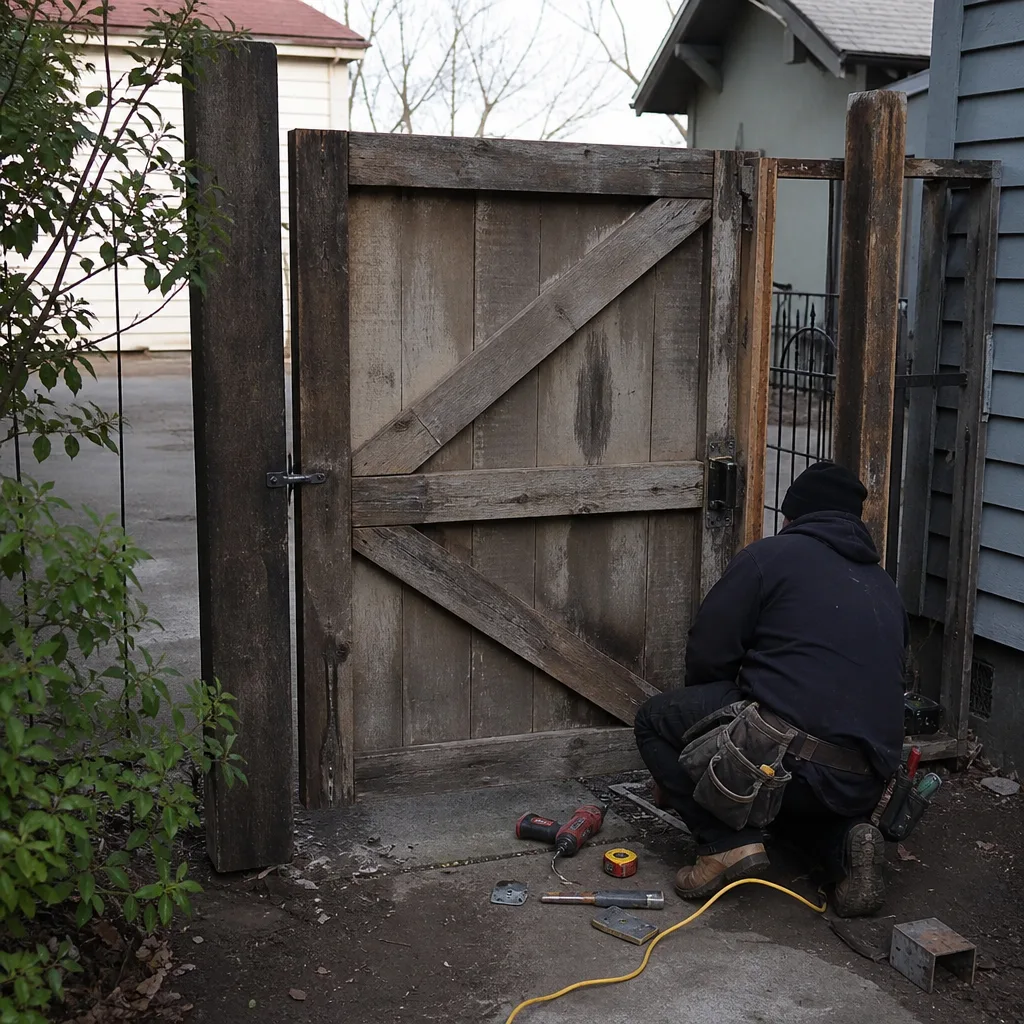 Before
 After
 Before
 After
 Before
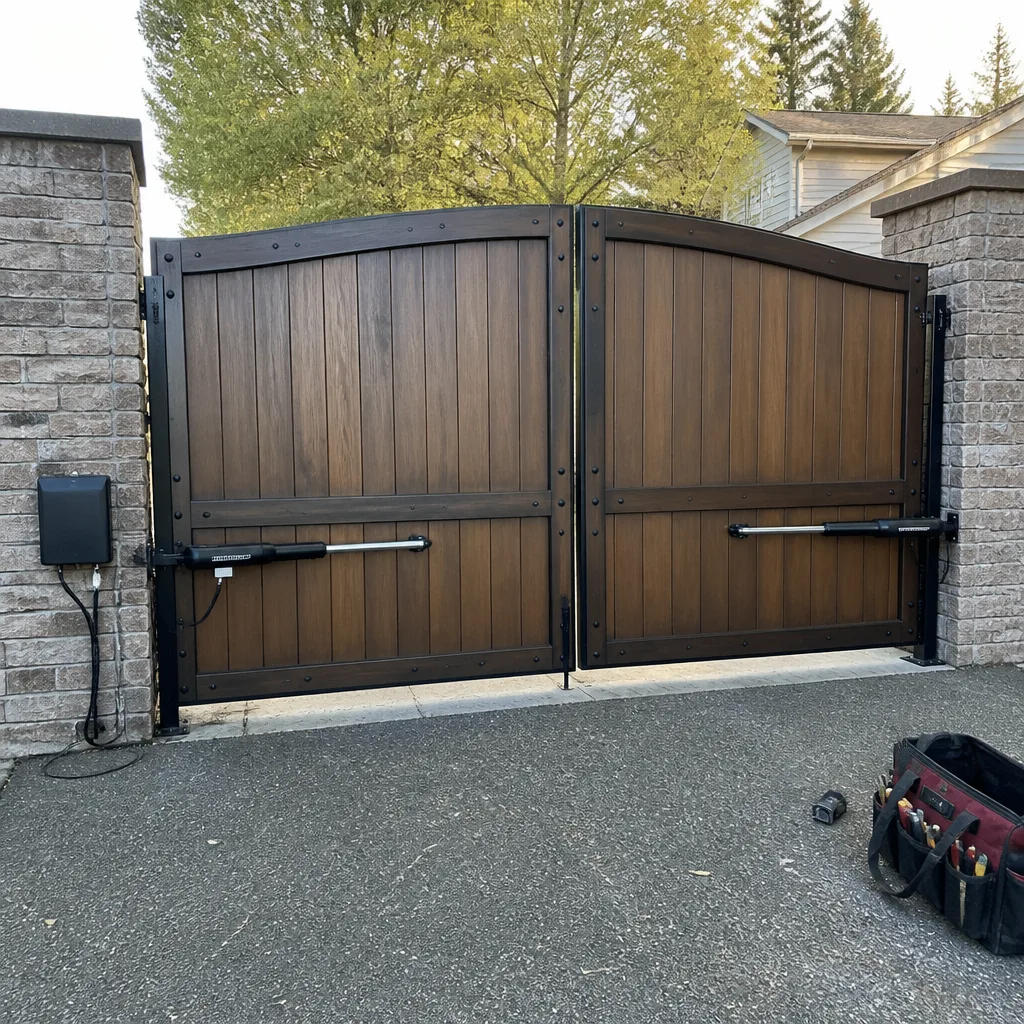 After
When to Call a Professional
Some gate problems are DIY-solvable with a manual release and a pair of chocks. These are not the majority. Call a gate specialist if your gate won’t move after disengaging the operator, which indicates a mechanical failure like a broken wheel, snapped hinge, or bent track. Call if the gate moved manually but won’t re-engage cleanly, because forcing the engagement will damage the drive gear. Call if the battery backup failed under load-testing, if the release mechanism is seized or damaged, or if the safety loops stopped reversing the gate after a power event. And call if you’re simply not sure what brand of operator you have or what the release looks like, or if you need clarity on Gate Repair Permits, Codes & Inspections in CA: What You Need to Know. Gate Repair Crocker-Amazon offers free estimates in Crocker-Amazon. Call (833) 842-7897 and describe what happened.
Frequently Asked Questions
First, locate and operate the manual release on your gate operator to disconnect the motor from the gate. Then try moving the gate by hand. If it won’t move, the problem is mechanical, not electrical, and you should call a gate specialist rather than forcing it. Call (833) 842-7897 for help with a stuck gate in Crocker-Amazon.
Test the manual release twice a year, ideally in spring and fall. The test takes five minutes, and it reveals whether the release is seized or functional before you actually need it. If the release is stiff or won’t disengage, that’s a repair issue to address now, not during an emergency.
Gate backup batteries typically last 2 to 4 years, with the shorter end of that range for hydraulic operators like FAAC and BFT that draw higher amperage. In Crocker-Amazon’s mild climate, the bigger factor is lack of cycling: batteries that never get exercised fail earlier through sulfation. Load-test yearly and replace below 11.8 volts under load.
In most cases, yes. Battery backup can be retrofitted to the majority of operators we service in Crocker-Amazon, though the specific approach depends on your operator’s voltage and control board. If the operator is too old to support a clean retrofit, a new gate installation with integrated backup may be the better long-term answer. Call (833) 842-7897 to discuss your specific operator.
A gate that moves slowly but still reaches full open or close is usually dealing with a voltage issue, a failing capacitor, or mechanical resistance like a worn wheel bearing. A gate that’s completely stuck has either a dead motor, a tripped breaker, or a mechanical failure like a broken gear. Level of detail matters when you call for service: “slow but moving” and “completely stuck” are different diagnostic paths.
Yes. We work on everything from single-family driveway gates in Crocker-Amazon to multi-unit apartment entry systems, and we’re trained on nine gate brands including FAAC, BFT, Linear, and Viking. That range means we can diagnose your specific brand without guesswork. Call (833) 842-7897 for a free estimate.
The Bottom Line
Gate emergency preparedness in Crocker-Amazon comes down to three things: knowing your manual release, verifying your battery backup, and having a physical emergency card in the vehicle. None of these are expensive or time-consuming, and all three become valuable in the same moment: a power outage or motor failure that leaves your car behind a gate that won’t move. The homeowners who handle a gate emergency calmly are the ones who tested the release in daylight, load-tested the battery before the PSPS event, and wrote down the model number when the gate was working fine. The ones who panic are the ones who never touched any of it. Being the first kind of homeowner is a choice you make now, not when the gate is stuck.
Written by the team at Gate Repair Crocker-Amazon, serving Crocker-Amazon since 2016.